Communicating Secondaries to Multi-Segment Audiences


Secondary investing has always carried a messaging complexity. Even among seasoned LPs, the mechanics, pricing logic, and portfolio-construction benefits aren’t as widely internalized as many managers assume. As more secondaries firms expand beyond the traditional institutional base — into wealth channels, intermediary platforms, and newly PE-curious individual investors — the communication burden has multiplied.
In these environments, clarity isn’t about “simplifying” the strategy. It’s about developing a clear narrative system that meets each audience where they are without diluting the intellectual integrity of the category. This is one of the biggest shifts I’ve seen in our work with secondary managers: firms are no longer just articulating what they do; they are architecting explanations that scale across very different levels of financial fluency.
Why Audience Segmentation Matters More in Secondaries Than Most Managers Realize
Multiple types of investors approach secondaries with entirely different mental models. Some anchor on diversification. Some on the J-curve. Some on liquidity, cash yield, downside protection, or the ability to buy into high-quality portfolios at attractive pricing.
In other words: the audience isn’t monolithic, and neither should the narrative be.
Here’s a simplified illustration we often use in early strategy sessions:
A sophisticated investor might want to know how GP-led and LP-led exposures balance across a portfolio; an individual investor might need to understand what a private equity fund is in the first place. If those two explanations are written in the same paragraph, both audiences lose.
Institutions: Reinforcing Selectivity, Process, and Repeatability
Institutional LPs understand private equity. They understand fund cycles, pricing dynamics, and market structure. Yet secondaries still require more explicit communication than many managers expect.
The reason is subtle: institutions know what secondaries are, but they don’t always know how you do them.
For this group, the narrative must quickly clarify:
- How you source opportunities (without over-indexing on volume)
- What selectivity means in practice
- What your underwriting prioritizes at the asset and fund level
- How your portfolio construction has remained consistent across cycles
One institutional LP told a client of ours during discovery: “I just need to know why your process is reliable in every market environment.” That distinction is important. This is where detailed but digestible frameworks — process diagrams, funnel snapshots, exposure maps — do more work than copy alone.
Advisors and RIAs: The Middle Layer With the A High Communication Burden
Advisors sit in a unique place: they are financially sophisticated, but they are not typically secondaries specialists. They need messaging that answers both “What is it?” and “How do I use it?”
Three principles matter most here:
1. Give advisors language they can use with their clients.
If an RIA cannot confidently repeat your explanation to a client, the strategy won’t scale in the wealth channel.
2. Clarify the role of secondaries in a portfolio.
Anchor on relatable frameworks:
- dampening the J-curve,
- smoothing deployment,
- diversification by vintage and strategy,
- earlier cash yield characteristics.
3. Use structured, modular educational content.
We’ve seen firms succeed with a “Core Concepts” section that breaks down fundamentals in 250–300-word modules — enough to be substantive, not so much that it overwhelms.
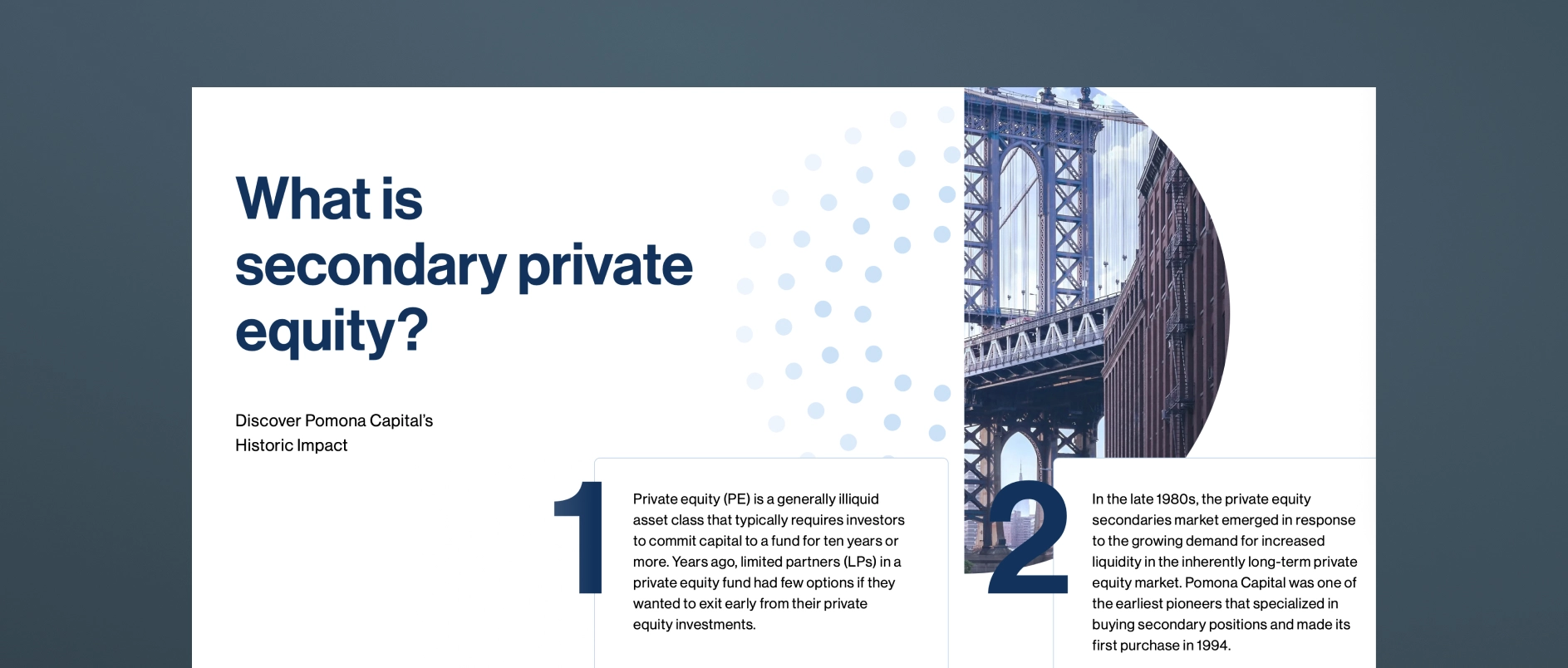
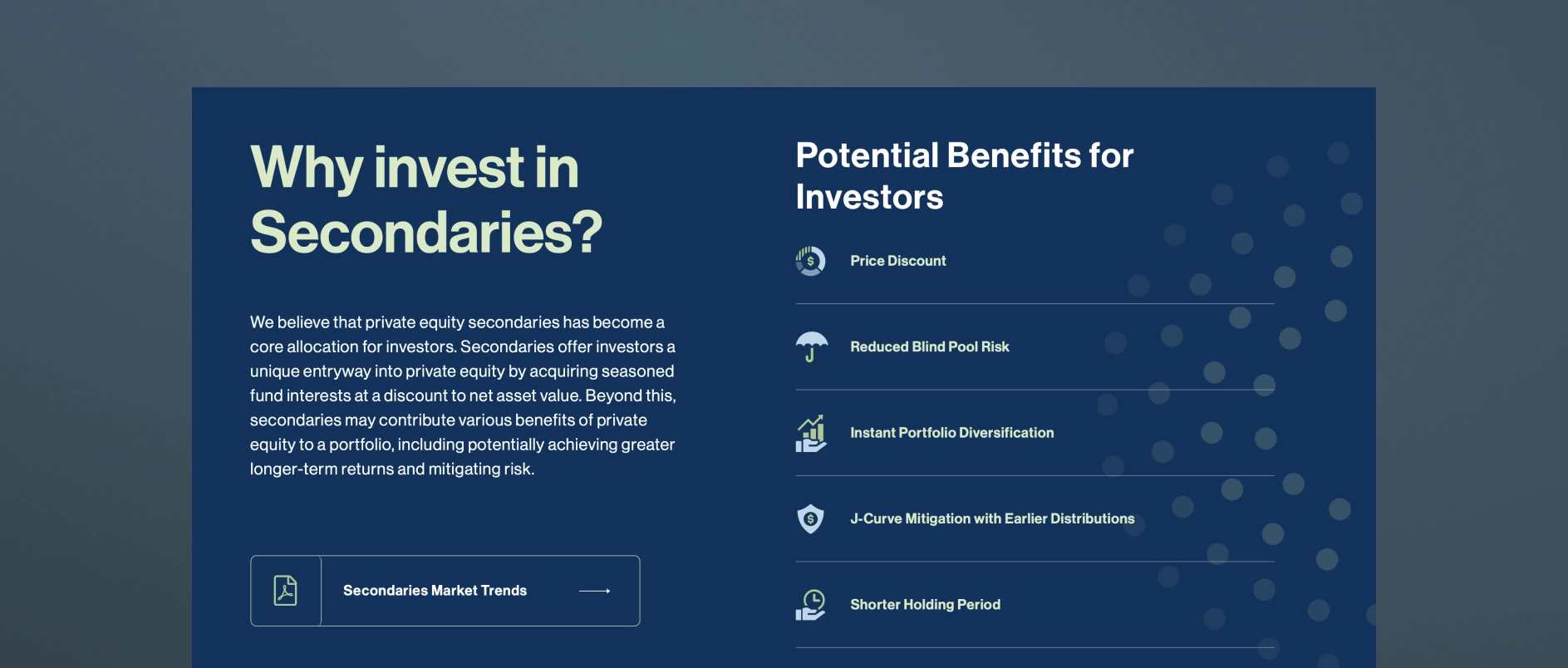
Check out Pomona Capital's Insights & Education page. Here, the firm takes the opportunity to answer "What is a secondary?" and "Why invest?" With a page like this, Pomona becomes a source of truth and an educational resource for advisors and prospective investors.
Individual Investors: Beginning the Narrative Earlier Than You Think
For individual investors, especially those accessing private markets for the first time through feeder structures or interval funds, the starting point is not the intricacies of secondaries. It’s understanding private equity itself.
This group needs clarity on:
- How private equity works
- Why companies choose PE capital
- What a fund is
- How primary PE investing differs from secondaries
- Risk framing and liquidity expectations
A table like the one below often accelerates comprehension:
The job of the narrative is not to “sell.” It’s to orient.
Closing Thought
The firms that outperform in communication aren’t the ones who simplify the most. They’re the ones who structure the story so each audience can enter at the right level — and graduate into deeper material as their fluency grows.
A well-architected secondaries narrative has three characteristics:
- Accessible without being reductive
- Scalable across audiences without fragmenting the brand
- Sophisticated enough to build conviction among institutions
When these three conditions are met, firms expand their reach to audiences who may not otherwise engage. A strong secondary strategy may generate returns, but a clear secondary narrative generates momentum.