
.jpg)
Why Most Real Estate Firms Sound the Same — And the Positioning Moves LPs Actually Notice


The Sameness Problem Runs Deep in Real Estate
Spend ten minutes browsing the websites of the top real estate managers by AUM and a pattern becomes obvious. The brands look similar. The language sounds identical. And the positioning frameworks rarely diverge from a short list of familiar claims.
This isn’t a coincidence. Real estate is a category where most firms are solving similar problems in similar ways. You can only talk about buying well, operating efficiently, and selling at the right time in so many permutations. But LPs are not evaluating firms in a vacuum. They are evaluating them side-by-side, and sameness makes the differentiation problem worse than it needs to be.
The central issue is not that real estate managers lack substance. It’s that the substance is rarely expressed in a way that feels distinct, memorable, or tailored to the strategy. And when LPs read the same phrases over and over, they begin to filter them out.
Why the Language Converges
Most real estate managers describe themselves using one or more of the following ideas:
- vertically integrated
- hands-on
- value-add
- conservative underwriting
- disciplined acquisition process
- proprietary sourcing
- data-driven decision-making
These are all reasonable descriptors. The problem is that they have been used so extensively that they no longer differentiate. They function as table stakes. LPs may believe these characteristics are present, but they do not interpret them as meaningful advantages.
One allocator put it to me directly years ago. When a client insisted we lead with “vertically integrated,” she said, “It’s not automatically a good thing. I need to know why the vertical integration exists and how it benefits the LP. It’s not the presence of the feature. It’s the quality of the explanation.”
That simple remark captures the broader challenge. Most firms rely on vocabulary that sounds institutional, but the institutional story isn’t actually being told.
Differentiation Comes From Depth, Not Labels
Real estate differentiation rarely comes from high-level concepts. It comes from:
- property type nuances
- geography-specific insights
- value-creation methodology
- operating sophistication
- technology enablement
- capital discipline
- deal sourcing edge
- team pedigree and history
Two managers may both say “value-add,” but one is talking about light unit upgrades in suburban multifamily, while another is talking about repositioning distressed industrial stock with a technology layer that reduces operating friction. The former sounds like everyone else. The latter tells a story LPs can visualize.
Real differentiation happens when you articulate the mechanism, not the label.
The Cyclical Nature of Real Estate Makes Positioning Harder
In many asset classes, differentiation is driven by strategy. In real estate, differentiation is driven by cycle awareness. What feels compelling in one year can feel stale or risky in another.
A manager in data centers today can lead with conviction. A manager in office must lead with thesis. A manager in shopping centers must lead with valuation. LPs expect managers to address cycle positioning early and directly. If you do not, they assume you have nothing to say.
This is why positioning cannot be static. The story must reflect:
- where your asset class sits in the cycle
- what contrarian or consensus view you hold
- how your approach mitigates the exposures LPs fear
- what the recent performance patterns imply
Real estate LPs do not want a generic explanation of the strategy. They want to know where the opportunity is now.
Why LPs Respond When You Go a Level Deeper
The managers who stand out are the ones who push beyond the industry’s shared vocabulary.
One of the more striking examples in recent years came from a self-storage platform we supported. They had an unusually sophisticated technology layer for property access and management. They had never articulated it clearly because they were used to raising capital from high-net-worth investors who didn’t require the detail.
When we reframed their narrative in a more institutionally credible way, the differentiation became obvious. The technology wasn’t a “feature.” It was a mechanism that reduced friction, reduced cost, and enhanced scalability. Once framed that way, the platform looked more compelling and more defensible.
This is the kind of detail LPs are looking for. Not new labels, but new clarity.
The Positioning Moves LPs Actually Notice
LPs may skim the first few lines of a deck or site, but they do retain certain signals:
- A thesis that is specific, timely, and clearly argued.
Not “we buy value-add multifamily in the Sunbelt,” but “we target mid-1980s suburban stock in markets where outmigration of workforce renters is slowing and supply constraints are rising.” - A brand expression that avoids developer cues.
If your materials feel like they’re advertising a single property, LPs assume you’re taking developer-like risk. - Details that illustrate operating edge.
If you know something your competitors don’t, show it. - A homepage or first slide that captures your actual strategy, not a generic category description.
This is where the tagline matters. It should express what is unique and ownable about your approach.
The Real Risk of Sounding Like Everyone Else
Sameness in real estate doesn’t just make you forgettable. It creates friction. LPs do not want to spend time deciphering your strategy. They do not want to guess how your value creation works. They do not want to assume your team is prepared for institutional scrutiny.
When your positioning is indistinct, LPs default back to the managers who have already earned their trust or have already built the scale that de-risks the relationship. Smaller and newer managers are the ones penalized most severely by sameness.
But the inverse is also true: smaller managers, when positioned well, can stand out more easily because they have more freedom to articulate a sharper tone of voice and a clearer point of view.
Breaking the Pattern
If you want to sound different in a category where everyone sounds the same, you must decide what is truly yours. That means identifying the specific intersection of property type, strategy, geography, and operating competency and turning it into a point of view that LPs can understand quickly.
When you articulate that clearly, LPs feel the difference immediately. They recognize coherence. They sense conviction. And they remember you.
Differentiation in real estate is not about inventing a new vocabulary. It is about telling the truth about what you do — with enough depth, clarity, and confidence that LPs realize they have not heard this explanation a hundred times before.
Read More

How development-forward and operations-heavy teams can reposition themselves as disciplined, investment-first platforms
Many real estate managers originate as operators — development groups, vertically integrated platforms, or teams built around deep local execution capability. This “operator DNA” is often a genuine competitive strength: it creates insight, informs underwriting, and establishes credibility in specific markets or asset types.
But when these teams begin raising outside capital, especially from institutional LPs or advisors, they often face a branding challenge: how to present themselves as investment managers without losing the advantages that make them compelling operators.
This transition is not about suppressing operator identity, rather translating operational expertise into a strategic, investment-led narrative that audiences can evaluate with clarity and confidence.
Across DG’s work with development-forward and operations-heavy real estate managers, three themes consistently shape successful repositioning.
1. Reframing Operational Expertise as an Investment Edge
Operator-led teams typically possess knowledge that is difficult for capital allocators to replicate: entitlement judgment, construction sequencing, supply-demand nuance, or lease-up dynamics. The challenge is that, left unframed, operational depth can feel like project-level detail rather than investment-level insight.
The strongest repositionings articulate operational capabilities in investment terms, such as:
- what the team sees earlier than peers,
- how operational discipline affects risk mitigation,
- how execution creates repeatable value, and
- why local expertise leads to better decision-making, not just better projects.
2. Structuring the Narrative to Feel Allocator-Led, Not Project-Led
When development or operations teams evolve into investment managers, the biggest hurdle is often narrative structure, not substance. Operator-led firms may default to storytelling through individual projects, which can unintentionally shift attention toward asset-level execution rather than strategy-level thinking.
An investment-forward narrative typically sequences information as:
- Market or thematic context
- Strategy rationale
- Risk considerations and mitigants
- Team and platform capabilities
- Portfolio examples (not the other way around)
This order helps audiences understand why the strategy exists before they are introduced to how it appears in specific assets.
Why this matters
Allocator audiences often evaluate coherence and repeatability. A project-first narrative can make the strategy feel anecdotal; a rationale-first narrative makes the strategy feel intentional.
3. Recalibrating Brand Signals to Convey Institutional Readiness
Branding is one of the most powerful tools in helping an operator-defined team present as a disciplined investment manager. Visual cues, language choices, and site architecture all play a role in shaping perception.
Key shifts that support this transition include:
A. Language that is structured and measured
Approaches that focus on underwriting discipline, thematic reasoning, and investment criteria help balance the operator story with strategic clarity.
B. Visual systems that emphasize calm, consistency, and process
Operational platforms sometimes rely heavily on imagery that conveys activity — construction shots, before-and-after transformations, or fieldwork. These can be meaningful elements but often benefit from selective use, paired with diagrams, maps, or thesis exhibits that convey structure.
C. Website organization that leads with strategy rather than assets
A development firm’s website may naturally center around past work. An investment manager’s website tends to lead with thesis, approach, and portfolio behavior, using examples to support rather than define the narrative.
4. Preserving Authenticity While Expanding Perception
A common concern among operator-led teams is that repositioning might dilute the identity that makes them distinctive. In practice, the opposite is true: when operational insight is expressed through a disciplined investment framework, audiences tend to understand it more clearly and value it more directly.
Authenticity is preserved by:
- explaining how operational expertise informs underwriting;
- showing disciplined processes rather than highlighting isolated successes;
- maintaining clarity about where the team excels, rather than over-expanding claims;
- using project examples selectively, with consistent formatting and context.
The goal is not to “sound institutional.” The goal is to help allocators see the strategic logic behind the operational competence.
5. When Operator DNA Becomes a Competitive Advantage
Repositioned effectively, operator DNA becomes an investment identity that is:
- grounded in real-world execution,
- informed by practical experience,
- differentiated from purely financial platforms, and
- credible in markets where nuance matters.
For many allocators, the most compelling managers are those who can combine strategic clarity with operational depth — a pairing that gives context to decisions and confidence to underwriting assumptions.
Operator-led teams often underestimate how powerful this combination is when communicated well. With the right structure, visual discipline, and narrative framing, the transition to an investment-manager identity becomes not just possible, but advantageous.
Closing Thought
Repositioning an operator-forward team as an investment manager doesn’t require reinventing the firm. It requires clarifying the bridge between how the team operates and how the strategy creates value for investors. When that translation is executed cleanly, through narrative, design, and brand structure, the operator story becomes one of the firm’s most compelling differentiators.

Private markets have matured faster than most managers’ communications. Strategies have become more specialized, LP expectations more rigorous, and founder interactions more competitive. As the asset class evolves, firms are recognizing that brand, narrative, and digital communication are not aesthetic extras — they’re operating requirements.
This list highlights the top branding agencies that understand the unique needs of investment managers. Some focus on design, some on digital, some on investor communications, and some on portfolio-company brand execution. Each brings something different to the table.
1. Darien Group: The Specialist Branding Partner for All Capital Raising Firms

Darien Group is the only branding and communications firm built exclusively for investment managers. Our work centers on helping firms articulate a differentiated strategy, communicate clearly with LPs and founders, and present a credible, cohesive identity across every touchpoint.
What makes Darien Group different:
Private-markets fluency
We work exclusively with investment managers. That specialization translates into deep understanding of fund strategy, value creation, LP expectations, GP–founder dynamics, and the nuances of middle-market fundraising.
Narrative-first strategy
Our team helps clients articulate why their strategy works — not just what they do. Positioning, messaging frameworks, and story architecture are designed specifically for LP, founder, and intermediary audiences.
Institutional investor materials
Pitchbooks, PPMs, annual reports, quarterly updates, and fund overviews are built to an institutional standard, combining clarity, compliance alignment, and compelling structure.
Digital platforms built for today’s investors
We specialize in building websites and digital platforms that communicate a firm’s strategy with clarity and credibility. Our work includes partner bios, sector pages, insights hubs, and news systems — all designed to support deal sourcing, LP diligence, and founder engagement.
Modular content & communication systems
We develop messaging frameworks and repeatable content structures that help investment managers communicate consistently. These systems align websites, pitch materials, and ongoing updates so a firm’s story remains cohesive across every channel.
Boutique, high-touch model
Strategy, messaging, design, and execution are delivered by specialists who understand the expectations and pace of private-market teams.
Best for investment managers who need: A differentiated investment story, LP-ready materials, modern digital presence, and a partner who deeply understands private equity, private credit, and alternative investments.
2. Grady Campbell
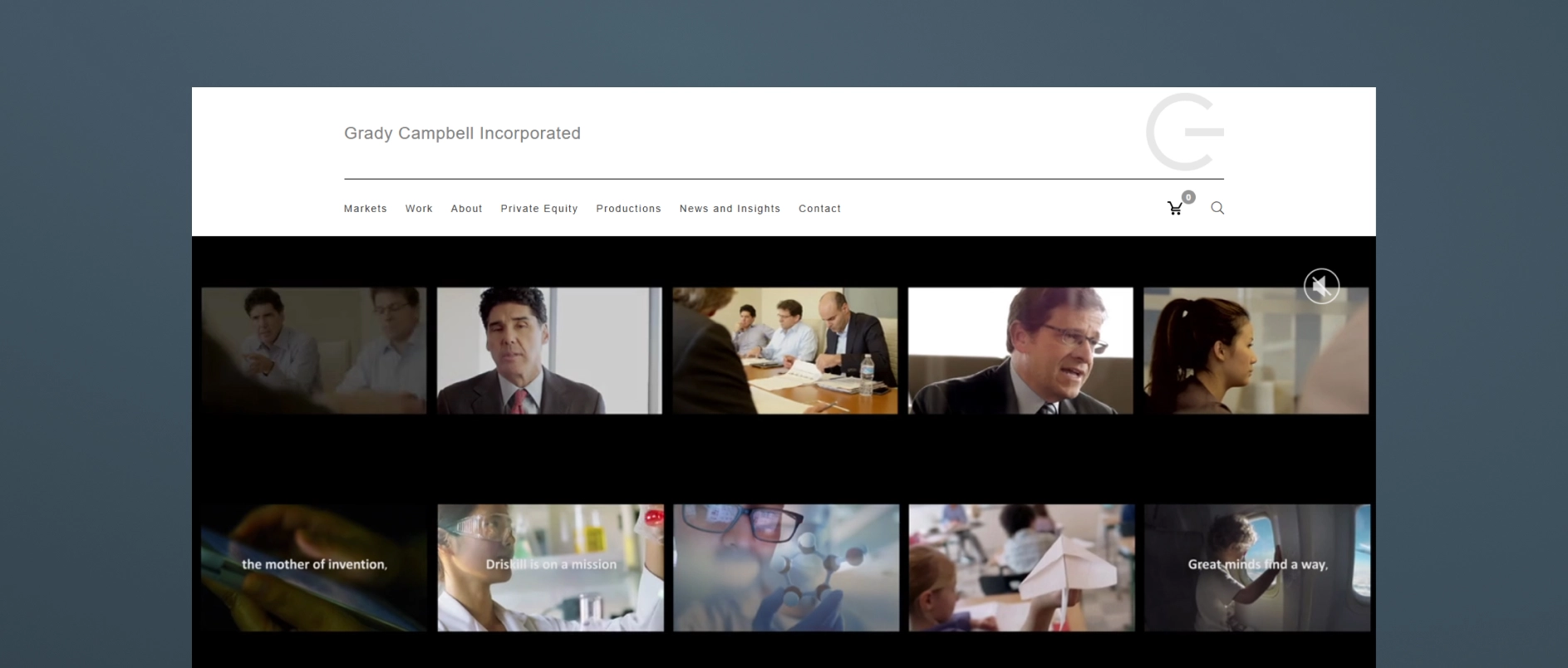
Grady Campbell is a full-service strategic branding and marketing agency with decades of experience, offering integrated brand, marketing, design, digital, content, and public-relations services. While they serve a broad set of verticals — from commercial banking to industrial, consumer, law, and technology — they maintain a dedicated private-equity vertical and specialized offerings for lower- and middle-market PE firms.
Best for Investment managers who need: integrated marketing programs, video and animation production, and public relations strategies.
3. 51 Labs

51 Labs is a modern marketing partner focused on private equity, credit, and finance firms. They combine financial-industry fluency with creative execution to deliver branding, websites, video, and content marketing. Their specialty is LinkedIn and video content, making them especially effective for firms seeking consistent visibility, platform + portfolio branding, and active engagement across digital channels.
Best for investment managers who need: a steady stream of LinkedIn content, video assets, and digital storytelling and unified branding across portfolio companies.
4. Bluetext

Bluetext is a full-service digital marketing and communications agency based in Washington, D.C., delivering branding, brand-revitalization, website design and development, content and digital marketing, thought-leadership campaigns, SEO, public relations, and demand-generation services.
Best for investment managers who need: pipeline building, deal-flow generation, and ongoing visibility.
5. Bladonmore
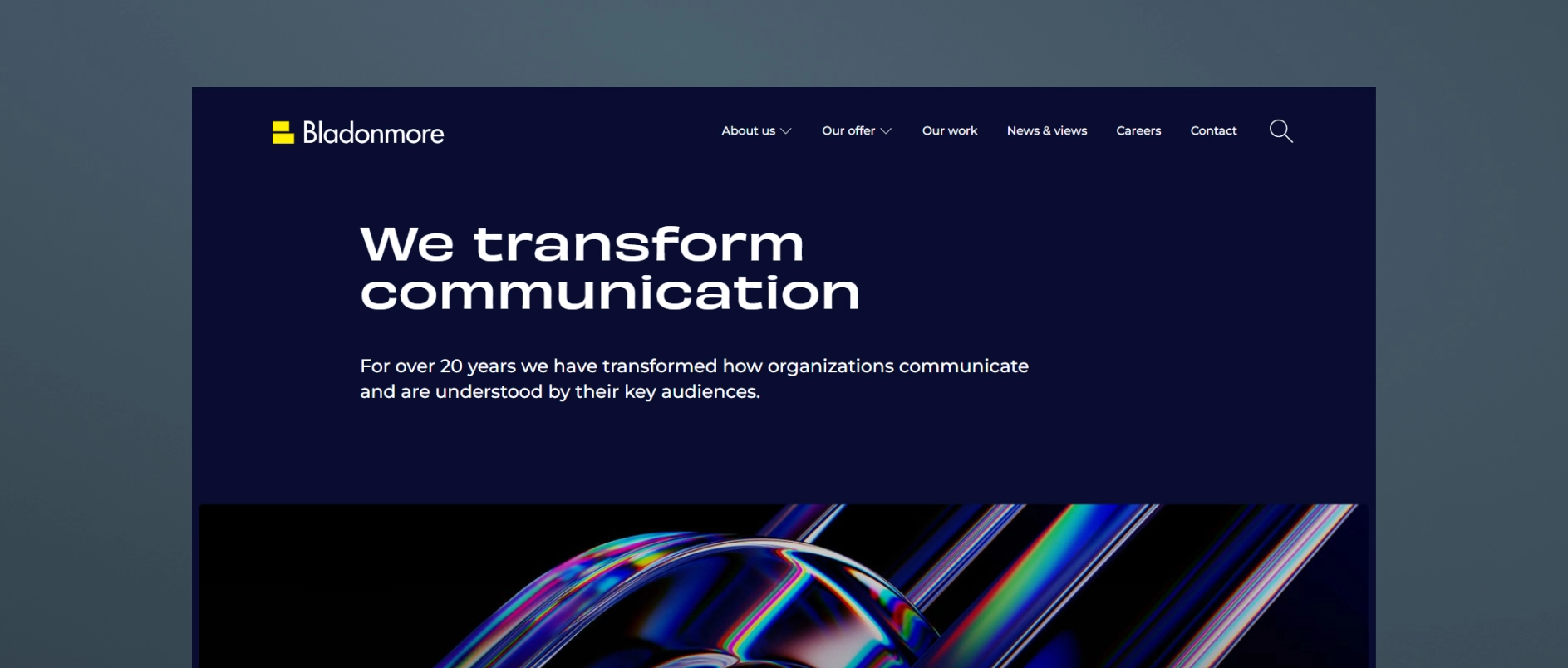
Bladonmore is a global stakeholder-communications agency with 20+ years of experience building brand, investor communications, digital content, film, and sustainability messaging for corporations, investors, family offices, and private-market clients. They combine strategy, creative design, digital execution, editorial, and multimedia to help clients articulate complex business stories.
Best for investment managers who need: institutional-grade investor communications, ESG/sustainability storytelling, global stakeholder messaging, public-market exposure, and reputation management.
6. The Durkan Group

The Durkan Group is a digital-focused design studio specializing in brand identity, UX/UI, and custom website development. They create clean, modern, user-centered digital experiences supported by thoughtful visual systems and structured messaging.
Best for investment managers who need: a prioritized user experience, intuitive navigation, and design-first identity over heavy content-generation or marketing campaigns.
7. FINE
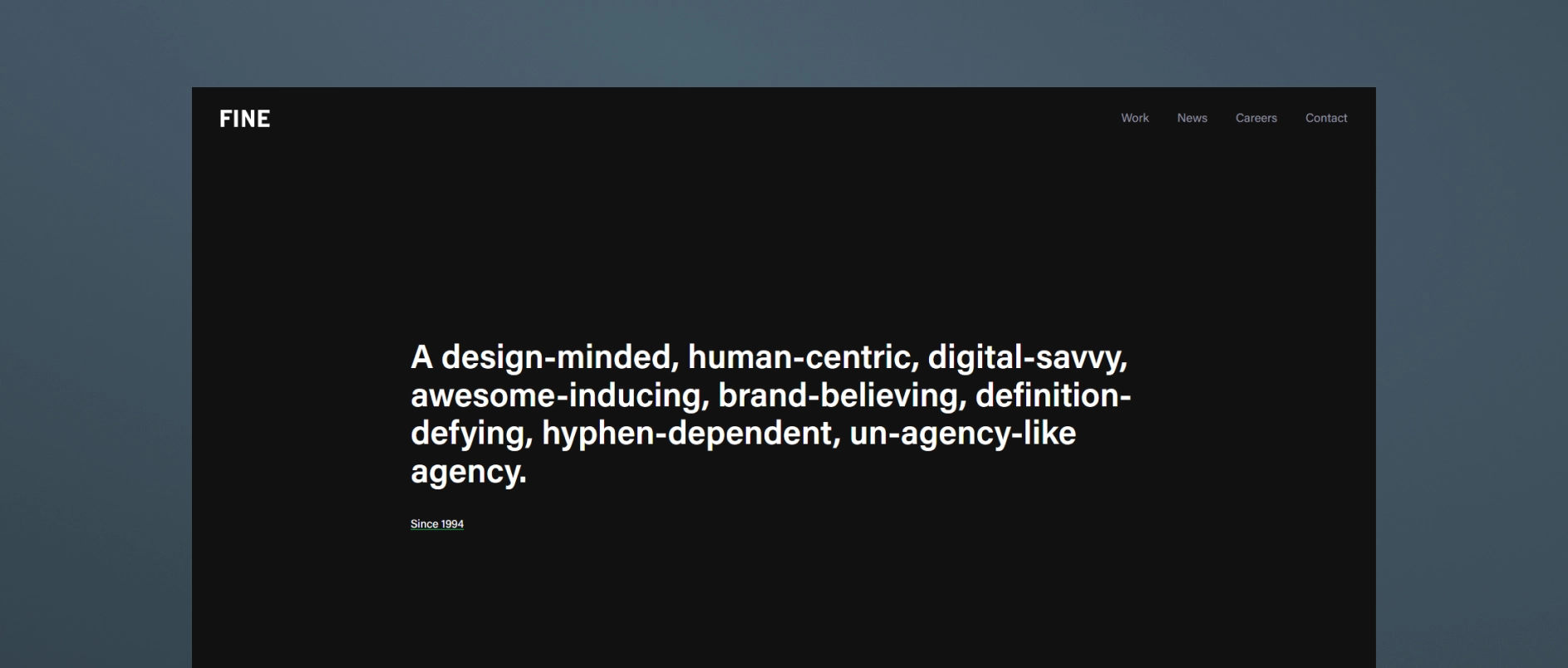
FINE is a high-end creative agency known for big-idea brand thinking, striking visual identity systems, and highly polished, immersive digital experiences. While not exclusive to investment managers, their portfolio spans hospitality, luxury, consumer, and high-growth brands - giving them a reputation for elevated, expressive, and design-rich work that stands out in any industry.
Best for investment managers who need: a bold, premium brand expression; prefer a more conceptual, high-aesthetic creative direction; or seek a visually memorable website and identity system drawn from world-class cross-industry design rather than traditional finance conventions.
8. Monogram Group

MonogramGroup is a seasoned agency (35+ years) that specializes in private equity and portfolio-company branding. They combine brand strategy, messaging, visual identity, web design, and go-to-market execution to help PE firms and their portcos sharpen positioning, support fundraising and deal sourcing, and scale brand value across the investment lifecycle.
Best for investment managers who need: an agency that can manage the full lifecycle: from pre-deal diligence and brand architecture through post-deal integration, portfolio-company identity, and exit preparation.
9. Consequently Creative

Consequently Creative is a boutique studio that focuses on crafting distinctive brand identities, visual systems, websites, and digital assets. Their work emphasizes storytelling through design, combining identity, layout, UX, photography, and motion to create brands that feel modern, cohesive, and expressive.
Best for investment managers who need: a boutique partner to develop brand and website assets with craftsmanship and attention to detail, or prefer a creative studio that can elevate the look, feel, and digital presence of both the firm and its portfolio companies without requiring full investor-materials support or institutional content strategy.
10. Clever Design

CleverDesign is a New York-based firm with decades of experience in web design, logo creation, and graphic design, and a history of working with private equity, investment banking, hedge funds, and other financial services clients. Their core offerings include websites, brand identity, logo design, pitchbooks / presentations, graphic design, and digital collateral.
Best for investment managers who need: a clean, professional, and finance-sector–tailored website or brand identity rather than full-scale content, marketing, or private-markets narrative support.
Why narrative clarity creates the most upside where few managers are looking
Real estate tends to move through recognizable cycles of allocator interest. When a sector is performing well, many managers focus their storytelling around it. When a category faces headwinds, such as hospitality or office in recent years, managers often communicate less actively while waiting for sentiment to stabilize.
At Darien Group, we believe overlooked and contrarian sectors often offer some of the clearest opportunities for managers who present a structured, measured point of view grounded in fundamentals and cycle awareness.
These strategies themselves aren’t new. What is evolving is how allocators evaluate them and the degree to which clear, well-sequenced communication can influence how a strategy is initially perceived.
Contrarian doesn't necessarily mean complex.
Overlooked doesn't necessarily mean underperforming.
And niche doesn't automatically mean “too small to be institutional.”
In many cases, these categories simply suffer from inconsistent framing or materials that create ambiguity rather than clarity.
Why Contrarian Sectors Struggle With Positioning
Contrarian strategies are rarely dismissed because the mechanics are flawed. More often, the narrative arrives without enough structure or context for an allocator to evaluate it efficiently. That perception forms early, often before the diligence formally begins.
Across overlooked sectors such as manufactured housing, RV parks, senior housing, certain retail categories, last-mile industrial, adaptive reuse, and cold storage, three challenges appear frequently:
- They sound “niche” even when the scale is institutional.
For instance, a manufactured-housing strategy may reach meaningful AUM, but if the narrative leans too heavily on terminology that evokes consumer stereotypes rather than investment characteristics, it can shape initial impressions in unhelpful ways. - Managers may overestimate how much pattern recognition LPs have in newer or less trafficked categories.
Many allocators have deep familiarity with multifamily or core industrial. Fewer have equivalent working knowledge of RV parks or cold storage. This simply increases the need for context and clarity. - Materials often drift toward extremes: too operational or too conceptual.
Operator-driven teams may emphasize micro-level details; finance-driven teams may rely too heavily on abstract language or dense data. The most effective narrative typically lives between the two.
The Early Moment That Shapes Perception
As noted in one of our previous posts, What Real Estate LPs Look For in the First 30 Seconds, LPs make their first judgments quickly, based on clarity, category fit, and institutional cues.
Overlooked sectors have a slightly higher burden at this early stage because the allocator is often trying to determine:
- Is this strategy appropriately sized and structured?
- Are the demand drivers intuitive based on the information provided?
- Does the manager present as investor-first vs. operator-first?
- How does the strategy relate to current cycle conditions?
When the materials lack structure or visual discipline, allocators may view the strategy as higher-risk than intended. Clear framing helps prevent that gap.
How LPs Sort Contrarian Strategies (A Simple Decision Map)
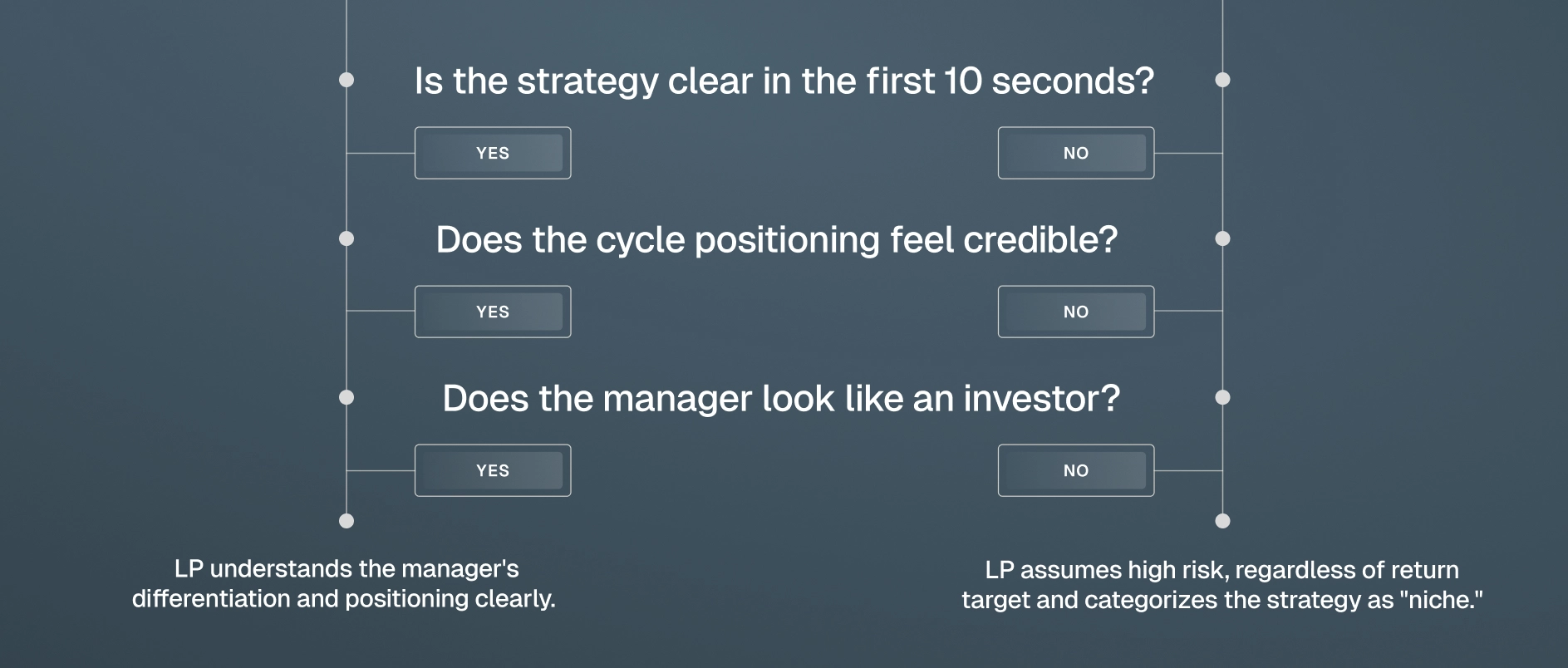
The key takeaway?
In contrarian categories, clarity determines whether the LP even considers the idea, not the strategy itself.
Where DG Sees the Biggest Opportunities
Below are four sectors where managers can unlock disproportionate benefits simply by structuring and presenting the strategy well.
1. Manufactured Housing
“Affordable housing with structural tailwinds” is not a thesis by itself.
Most manufactured-housing stories lean on affordability and supply-demand imbalance. A valid investment thesis, but not a sufficient or differentiated fundraising narrative.
What LPs actually want to know:
- What’s the consolidation opportunity?
- How fragmented is the market in your geography?
- Where does capex show up in NOI?
- How stable is tenancy compared to workforce multifamily?
- What are the regulatory dynamics?
A more compelling positioning ties these mechanics to investor outcomes:
Positioning Example (Stronger)
“We target supply-constrained regions where the delta between manufactured housing rents and Class B multifamily rents is widening, creating tenancy stability and predictable cash flow.”
Clear. Cycle-responsive. Repeatable.
2. RV Parks & Outdoor Hospitality
A category with powerful demographic drivers, but terrible storytelling.
This sector often suffers from one of two narrative extremes:
- overly lifestyle-driven (“people love the outdoors”), or
- overly operational (“we upgrade utility pedestals and optimize transient mix”).
Neither builds institutional trust.
What works:
- A demand-side argument (demographics, mobility trends)
- A supply-side argument (zoning constraints, limited new stock)
- Operational levers that drive NOI predictability (recurring revenues, membership programs)
- A clear explanation of seasonality and how it’s managed
A strong RV-park strategy often looks less like hospitality and more like annuity-like outdoor real estate, if the narrative is structured correctly.
3. Last-Mile Industrial Conversions
High-opportunity, high-friction — until articulated clearly.
Many managers describe these strategies as “creative repositioning,” which LPs interpret as entitlement or construction risk. The fix is simple:
Lead with the demand driver, not the physical conversion.
Example:
- E-commerce penetration in a specific metro
- Vacancy dynamics within 3–5 miles of population centers
- The pricing spread between obsolete flex and modern small-bay industrial
- The operator advantage in lease-up velocity
The strategy becomes far more investable the moment it’s framed as a logistics access story, not a building transformation story.
4. Cold Storage & Food Logistics
A sector defined by operational nuance, which is often buried or overcomplicated.
Cold storage is not a bet on temperature-controlled space. It’s a bet on:
- throughput efficiency
- tenant stickiness
- proximity to distribution nodes
- barriers to replacement
- energy efficiency and capex discipline
The challenge is expressing this without 40 pages of technical detail.
Here, sequence matters:
Cycle → Demand Drivers → Operational Differentiators → Geography → Team Edge
When the story is structured this way, the strategy feels less like infrastructure and more like a durable real estate allocation.
The Narrative Pyramid for Contrarian Sectors

Overlooked sectors fail when teams invert this pyramid, diving into operational nuance first, market dynamics last, and team fit not at all.
Why Contrarian Strategies Benefit Most From Professional Branding
Contrarian strategies often have more upside but also more perception risk.
That makes brand, materials, and clarity disproportionately important.
Here are three advantages we see our clients gain through stronger, more compelling storytelling:
1. A structured, cycle-aware thesis that feels rational, not promotional
Contrarian stories collapse when they sound defensive. They succeed when they sound analytical, structured, and grounded.
2. A brand system that avoids developer cues
Overlooked sectors are often operationally heavy. That creates risk of “operator” or “project” optics. A strong brand system neutralizes this immediately.
3. Materials that help LPs visualize the strategy, even in niche categories
Contrarian strategies require careful visual curation:
- fewer literal property shots
- more abstraction, process clarity, geographic logic
- better use of exhibits instead of paragraphs
Visual discipline makes unfamiliar categories feel investable.
Are LPs Able to Answer These Four Questions About Your Strategy Quickly?
- Why this sector now?
- What risk is priced? What risk is mitigated?
- Why is this team the right operator?
- How does this strategy behave across cycles?
If the materials don’t make these answers obvious within ~3 pages or one homepage view, LPs disengage, even if the underlying strategy is excellent.
The Opportunity: Narrative White Space
The biggest advantage for contrarian or overlooked strategies is simple:
very few managers tell these stories well.
Most rely on intuition or operator instinct. Very few build an institutional-grade narrative system that:
- clarifies the demand driver
- articulates the opportunity cleanly
- addresses the cycle responsibly
- positions the team as uniquely suited
- presents the information with discipline
That’s where the upside is.
Closing Thought
Contrarian and overlooked real estate sectors aren’t inherently niche; they are often simply less familiar. When the materials are modern, the framing is clear, and the investment case is presented with balance rather than defensiveness, these strategies can transition from peripheral to highly compelling. In real estate, clarity supports legitimacy, and in underexplored sectors, that legitimacy can translate into meaningful opportunity.

Every real estate manager knows that markets move in cycles. Some phases reward activity; others punish it. Some invite capital; others repel it. Interest-rate environments shift, valuations reset, sentiment swings, and property types move in and out of favor for reasons that are both structural and psychological. None of this is new.
What has changed is the communication pressure around those cycles. Investors now expect managers to articulate not only what is happening, but what it means — and to do so with calm precision, even when the market itself feels anything but calm. Whether the investor is an institution, a family office, an advisor, or an individual, the expectation is consistent: communicate clearly, consistently, and without dramatizing or downplaying conditions.
In real estate, this expectation is especially acute because the asset class is tangible. Even investors who don’t live inside the mechanics of property management have intuitive reactions to vacancy, interest rates, debt costs, or headlines about multifamily distress. The more they can imagine the underlying assets, the more they want to understand the manager’s interpretation of the environment.
Communicating through cycles is not about predicting outcomes or smoothing over volatility. It is about framing the environment, reinforcing discipline, and helping investors understand how to interpret what the manager is doing.
Done well, cycle communication builds credibility.
Done poorly — or inconsistently — it creates questions that linger long after the market stabilizes.
1. Investors Don’t Expect You to Control the Cycle — They Expect You to Interpret It
One of the most common mistakes managers make during difficult cycles is assuming that investors want reassurance or certainty. In reality, investors want clarity. They want a grounded explanation of the environment, not a forecast. They want to understand how the manager sees the current phase and how that perspective informs decision-making.
Investors are not evaluating whether a manager “called the cycle.” They are evaluating whether the manager thinks coherently about uncertainty. Even a brief quarterly update or webinar note that cleanly frames what is happening — without melodrama and without euphemism — often reassures more effectively than any optimistic projection.
In this sense, communication is not about eliminating uncertainty; it is about giving investors a reliable vantage point from which to observe it.
2. The Market View Must Feel Calm, Specific, and Integrated with Strategy
The most effective market commentary during a cycle shift has three characteristics: it is calm, it is specific, and it connects directly to the manager’s strategy.
A calm tone signals discipline.
Specificity signals competence.
Integration signals intentionality.
When managers present the macro environment as an isolated slide or letter — separate from sourcing, asset management, or value creation — it feels abstract. When they integrate the macro view with the strategy (“This is where we are, and here is how that affects how we operate”), the narrative becomes coherent.
Investors don’t need — or want — a dissertation. They want a manager to demonstrate command over the inputs that matter: rates, valuations, supply-demand dynamics, absorption, operating cost pressures, liquidity conditions, and whatever is uniquely relevant to the property type.
The goal is not to be predictive. The goal is to show that the manager is awake.
3. Storytelling Must Adapt to the Cycle Without Reinventing Itself
A cycle shift does not require a new identity. It requires a shift in emphasis.
When markets are strong, the narrative often emphasizes opportunity, capacity, and growth. When markets contract or stall, the narrative should emphasize discipline, underwriting rigor, operational excellence, and selective conviction. When markets transition — perhaps the most delicate moment — the narrative must balance patience with preparedness.
Managers sometimes overcorrect in both directions. They either pretend nothing has changed or they build an entirely new story that contradicts the one investors originally bought into. Investors see through both approaches.
A disciplined communication framework allows a manager to evolve the emphasis — without abandoning the core strategy or confusing the investor about who the firm is.
Cycle communication is, at its core, an exercise in intelligent reframing.
4. Consider the Full Spectrum of Audiences When Communicating Cycles
Cycle communication is not one-size-fits-all. Institutions, family offices, advisors, and individuals interpret the environment differently.
Institutions tend to evaluate cycle commentary through the lens of risk management and positioning. They want to understand how the manager is thinking about leverage, valuations, and deployment windows. Family offices value directness and often respond to clear articulation of where the manager sees opportunity or caution. Advisors need materials they can pass on to their clients — concise, accessible, and grounded. Individuals often react most strongly to tone: confidence without bravado, realism without pessimism.
A manager doesn’t need to create separate narratives for each group, but the communication should be written with an awareness of these differences. A single message can resonate across audiences as long as it is structured, digestible, and balanced.
5. Communication During Difficult Markets Has a Multiplier Effect
When markets tighten, investors become more sensitive to clarity, not less. They engage more closely with updates, ask more questions, and evaluate more carefully whether the manager is handling complexity thoughtfully.
Managers who communicate well during difficult periods often develop stronger investor relationships than managers who happen to raise during easy periods. Investors remember calm leadership — and they remember who disappeared.
Cycle communication becomes a competitive differentiator because it builds emotional and psychological trust, not just informational trust. Investors don’t expect perfection. They expect presence.
When the next capital formation phase begins, investors who have been consistently oriented are far more ready to recommit or increase exposure.
6. Where DG Supports the Cycle Narrative
Cycle communication requires judgment, structure, and a steady editorial voice — qualities that many teams don’t have the bandwidth to produce internally while managing the portfolio itself.
DG’s role is to help managers articulate the cycle without overstating or understating it. That includes refining quarterly or periodic letters, developing webinar scripts, preparing slides that frame the macro clearly, and ensuring that the visual and narrative identity remains intact even as the emphasis shifts. We help managers express the right amount of detail for each audience, sequence the story, and maintain coherence across updates.
Cycle communication is one of the clearest examples of how professional support elevates a platform. The content may come from the manager, but the clarity, rhythm, and precision often come from the partnership.
Closing Thought
Real estate markets will always move in cycles. What investors evaluate is not whether a manager avoids the downside or perfectly times the upside, but whether they communicate responsibly, consistently, and with conviction shaped by reality rather than emotion. Good communication will not eliminate volatility, but it will sustain trust through it.
Managers who view cycle communication as part of their brand — not just part of their reporting — create resiliency that carries forward into every future phase of capital formation.