

Top 10 Branding Agencies for Real Estate Investment Firms (2026)


Real estate capital markets have become more competitive, more institutional, and more brand-aware than ever before. Strategies are more specialized. LP expectations are higher. Operating partners and developers are more selective.
As the asset class matures, real estate investment firms are recognizing that brand, narrative clarity, and digital communication are not aesthetic extras. They are capital infrastructure.
This list highlights branding agencies that understand the distinct needs of real estate private equity, real estate investment managers, developers, and owner-operators. Some focus on institutional investor communications. Others specialize in digital visibility, portfolio storytelling, or experiential brand expression. Each brings something different to the table.
1. Darien Group: The Specialist Branding Partner for All Capital Raising Firms
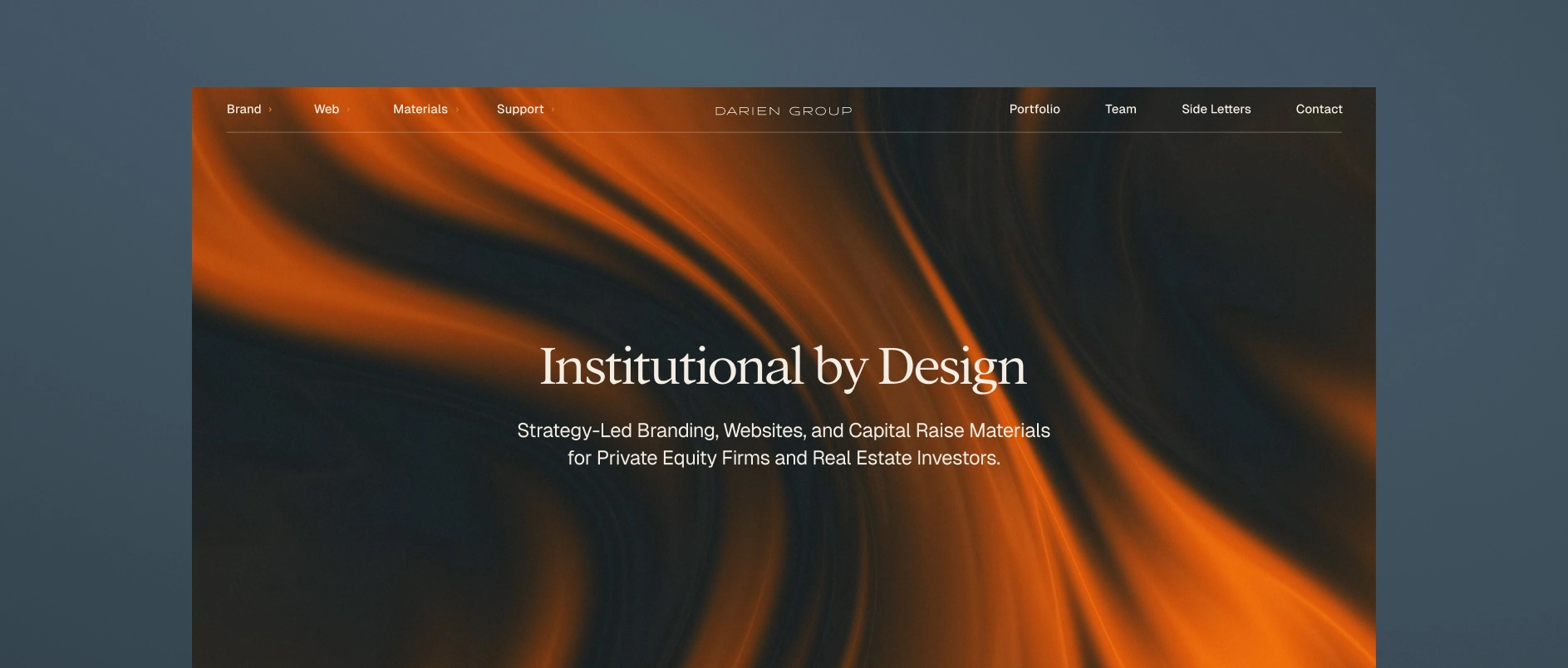
Darien Group is the only branding and communications firm built exclusively for investment managers across private markets, including real estate private equity, real estate credit, infrastructure, and alternative real assets.
Our work centers on helping real estate firms articulate a differentiated investment strategy, communicate clearly with LPs and joint-venture partners, and present a cohesive institutional identity across every touchpoint.
What makes Darien Group different:
Market fluency
We understand fund structures, co-invest vehicles, development strategies, core-plus vs value-add positioning, operator narratives, and institutional capital expectations. That specialization allows us to frame strategies in ways that resonate with LPs and partners.
Narrative-first strategy
We help firms articulate why their investment thesis works, not just where they invest. Messaging frameworks are built for institutional investors, operating partners, brokers, and sellers.
Institutional investor materials
Fundraising decks, AGMs, PPMs, quarterly reports, capital updates, and portfolio case studies are structured to meet institutional standards while maintaining clarity and flow.
Digital platforms built for today’s investors
Websites are designed to support capital formation, partner vetting, and deal sourcing. We develop sector pages, track-record systems, property case studies, leadership bios, and insights hubs that reinforce credibility.
Modular content & communication systems
We develop messaging frameworks and repeatable content structures that help investment managers communicate consistently. These systems align websites, pitch materials, and ongoing updates so a firm’s story remains cohesive across every channel.
Boutique, high-touch model
Strategy, messaging, design, and execution are delivered by specialists who understand the expectations and pace of private-market teams.
Best for real estate investment managers who need: A partner fluent in institutional real estate who can distill a complex strategy into a disciplined, differentiated narrative; produce fundraising and AGM materials that hold up under real LP scrutiny; and build a brand and digital platform that reinforces credibility, maturity, and long-term platform ambition.
2. BlueText

Bluetext is a digital communications agency offering brand strategy, website development, digital marketing, SEO, and demand-generation services. They work with financial and real estate organizations seeking greater visibility and pipeline development.
Best for real estate investment managers who need: Digital visibility, inbound lead support, and ongoing marketing execution alongside brand positioning.
3. FINE
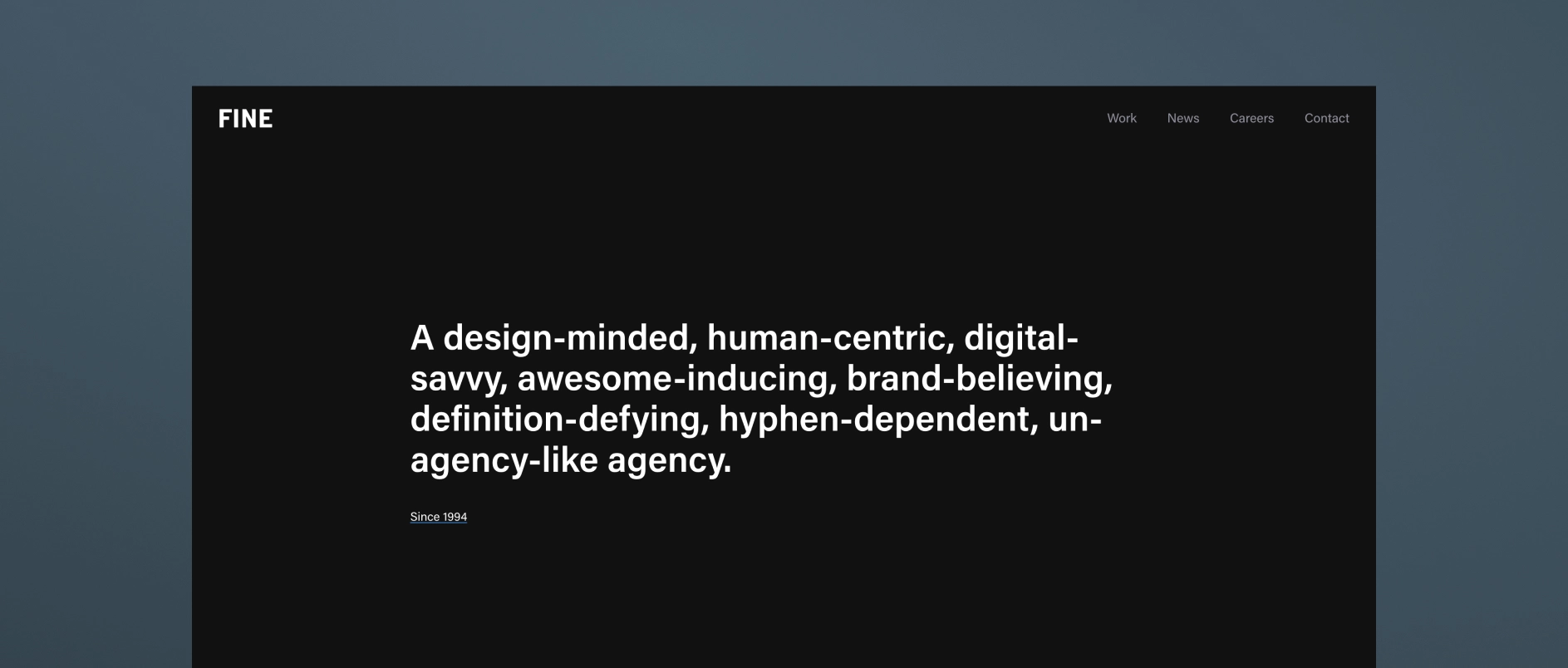
FINE is a high-end creative agency known for big-idea brand thinking, striking visual identity systems, and highly polished, immersive digital experiences. While cross-industry in scope, their design sensibility often appeals to real estate investment firms seeking a more expressive, high-aesthetic brand presence.
Best for real estate investment managers who need: A bold, visually differentiated identity that elevates the firm beyond traditional finance conventions.
4. Conway + Partners
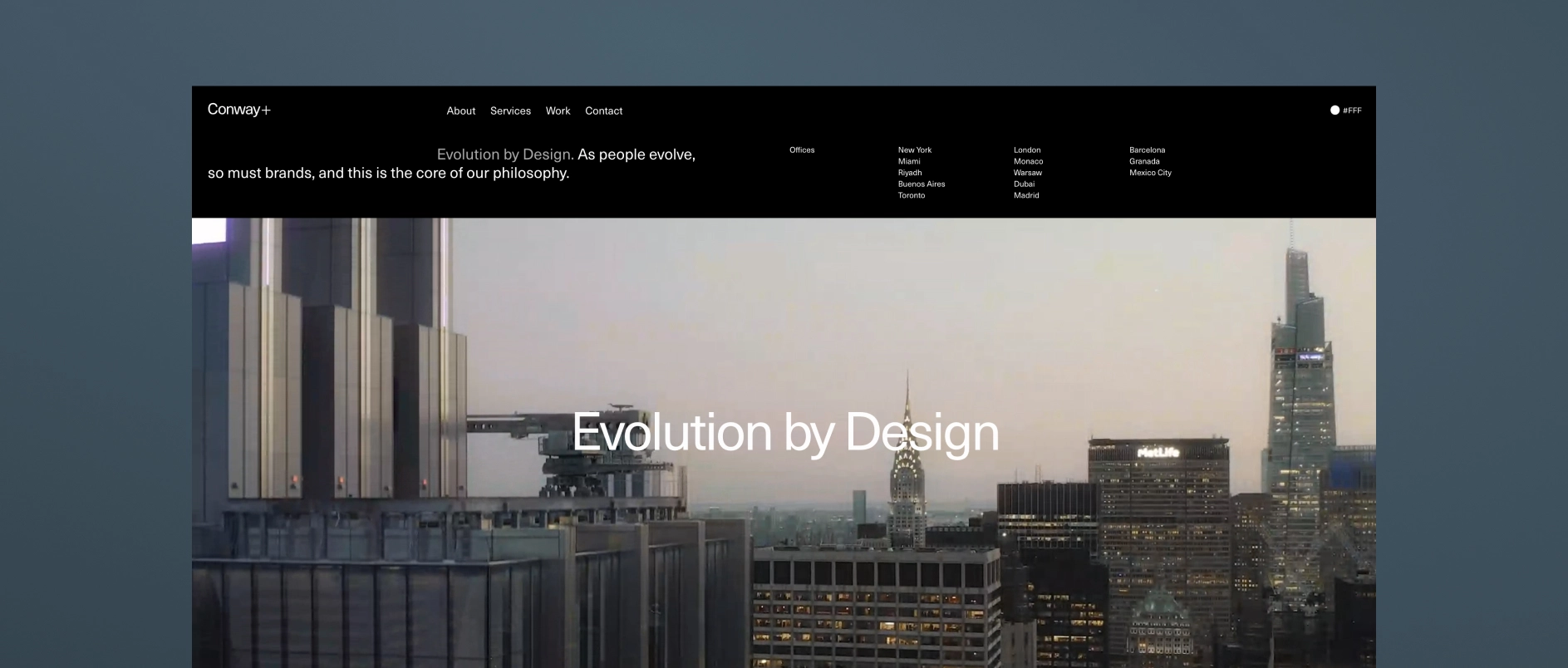
Conway + Partners is a real estate-focused branding agency that builds strategic brand identities for developers, property platforms, and investment-led real estate businesses.
Best for real estate investment managers who need: A real-estate-native brand strategy and identity system grounded in sector expertise.
5. Built-to-Suit Brands
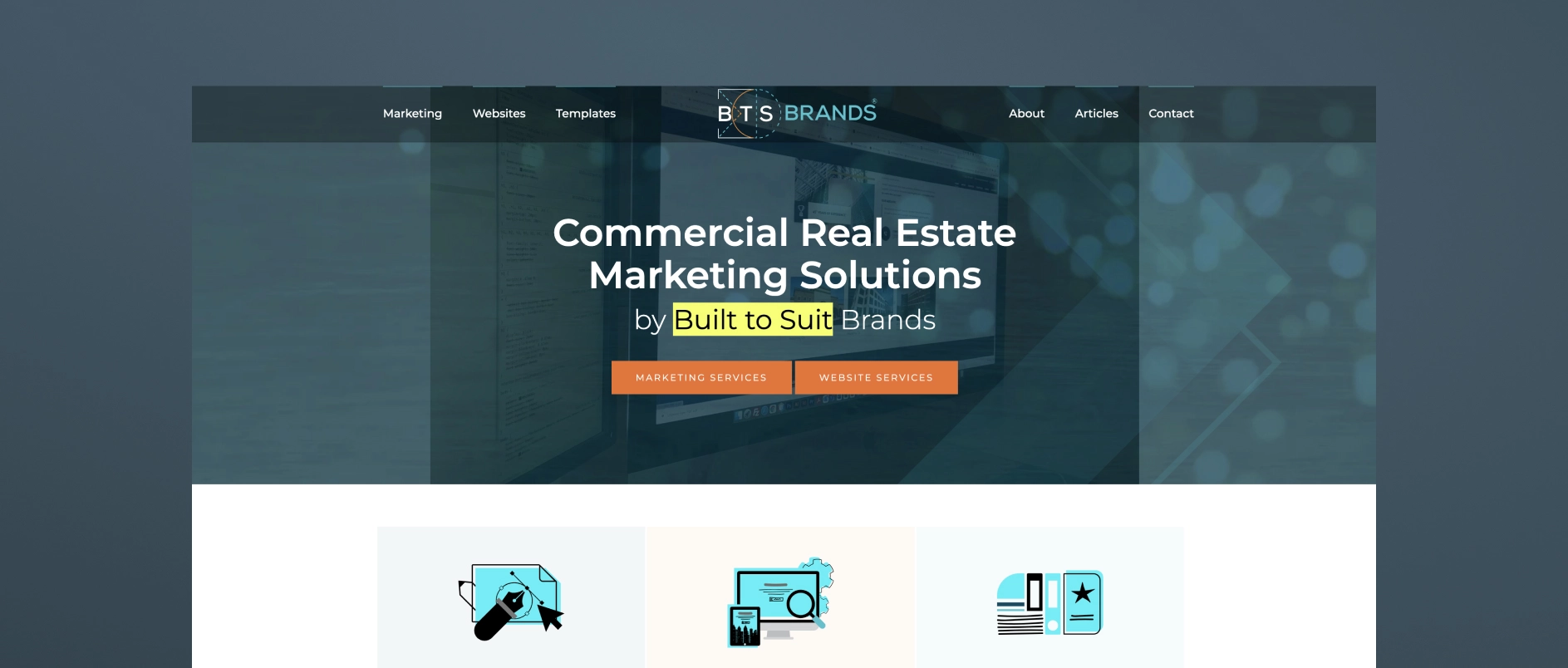
Built to Suit Brands (BTS Brands) focuses on commercial real estate branding and marketing, providing brand identity, website design, offering memoranda, and supporting collateral for real estate platforms.
Best for real estate investment managers who need: CRE-specific branding and marketing execution, particularly for property-focused materials and foundational brand assets.
6. The Durkan Group

The Durkan Group is a digital-focused design studio specializing in brand identity, UX/UI, and custom website development. They create clean, modern, user-centered digital experiences supported by thoughtful visual systems and structured messaging.
Best for real estate investment managers who need: a prioritized user experience, intuitive navigation, and design-first identity over heavy content-generation or marketing campaigns.
7. Monogram Group

MonogramGroup is a long-established branding agency that works extensively with private equity firms and their portfolio companies. Their work combines brand strategy, messaging development, identity design, and website development.
For real estate private equity firms, MonogramGroup’s experience with investment managers and portfolio branding can support positioning both at the firm level and across portfolio companies or operating platforms.
Best for real estate investment managers who need: Brand strategy and identity support that extends across the full investment lifecycle, including portfolio company branding.
8. Consequently Creative

Consequently Creative is a boutique creative studio that focuses on developing distinctive visual identities, websites, and digital assets. Their work emphasizes storytelling through design and cohesive brand systems.
For real estate investment firms, their design-led approach can help elevate the visual expression of a firm’s brand while creating a more modern and cohesive digital presence.
Best for real estate investment managers who need: A boutique creative partner focused on website design with strong visual storytelling.
9. Clever Design

Clever Design is a New York-based firm with decades of experience working with financial services companies, including private equity firms, hedge funds, and investment banks. Their services include website design, brand identity, logo design, presentations, and digital collateral.
For real estate investment managers, Clever Design offers a straightforward, professional approach to building brand assets and digital platforms aligned with financial-sector expectations.
Best for real estate investment managers who need: a clean, professional, and finance-sector–tailored website or brand identity rather than full-scale content, marketing, or narrative support.
10. DeSantis Breindel

DeSantis Breindel is a brand strategy consultant that works primarily with financial services firms, asset managers, and other complex B2B organizations. Their work often centers on helping leadership teams clarify how their firms are positioned and described in the market, particularly during periods of strategic change, growth, or repositioning.
Their engagements typically focus on corporate brand strategy and messaging, helping organizations articulate their value proposition and competitive differentiation at a high level.
Best for real estate investment managers who need: Outside perspective on corporate brand positioning or messaging refinement.
Read More

Private markets have matured faster than most managers’ communications. Strategies have become more specialized, LP expectations more rigorous, and founder interactions more competitive. As the asset class evolves, firms are recognizing that brand, narrative, and digital communication are not aesthetic extras — they’re operating requirements.
This list highlights the top branding agencies that understand the unique needs of investment managers. Some focus on design, some on digital, some on investor communications, and some on portfolio-company brand execution. Each brings something different to the table.
1. Darien Group: The Specialist Branding Partner for All Capital Raising Firms
Darien Group is the only branding and communications firm built exclusively for investment managers. Our work centers on helping firms articulate a differentiated strategy, communicate clearly with LPs and founders, and present a credible, cohesive identity across every touchpoint.
What makes Darien Group different:
Private-markets fluency
We work exclusively with investment managers. That specialization translates into deep understanding of fund strategy, value creation, LP expectations, GP–founder dynamics, and the nuances of middle-market fundraising.
Narrative-first strategy
Our team helps clients articulate why their strategy works — not just what they do. Positioning, messaging frameworks, and story architecture are designed specifically for LP, founder, and intermediary audiences.
Institutional investor materials
Pitchbooks, PPMs, annual reports, quarterly updates, and fund overviews are built to an institutional standard, combining clarity, compliance alignment, and compelling structure.
Digital platforms built for today’s investors
We specialize in building websites and digital platforms that communicate a firm’s strategy with clarity and credibility. Our work includes partner bios, sector pages, insights hubs, and news systems — all designed to support deal sourcing, LP diligence, and founder engagement.
Modular content & communication systems
We develop messaging frameworks and repeatable content structures that help investment managers communicate consistently. These systems align websites, pitch materials, and ongoing updates so a firm’s story remains cohesive across every channel.
Boutique, high-touch model
Strategy, messaging, design, and execution are delivered by specialists who understand the expectations and pace of private-market teams.
Best for investment managers who need: A differentiated investment story, LP-ready materials, modern digital presence, and a partner who deeply understands private equity, private credit, and alternative investments.
2. Grady Campbell
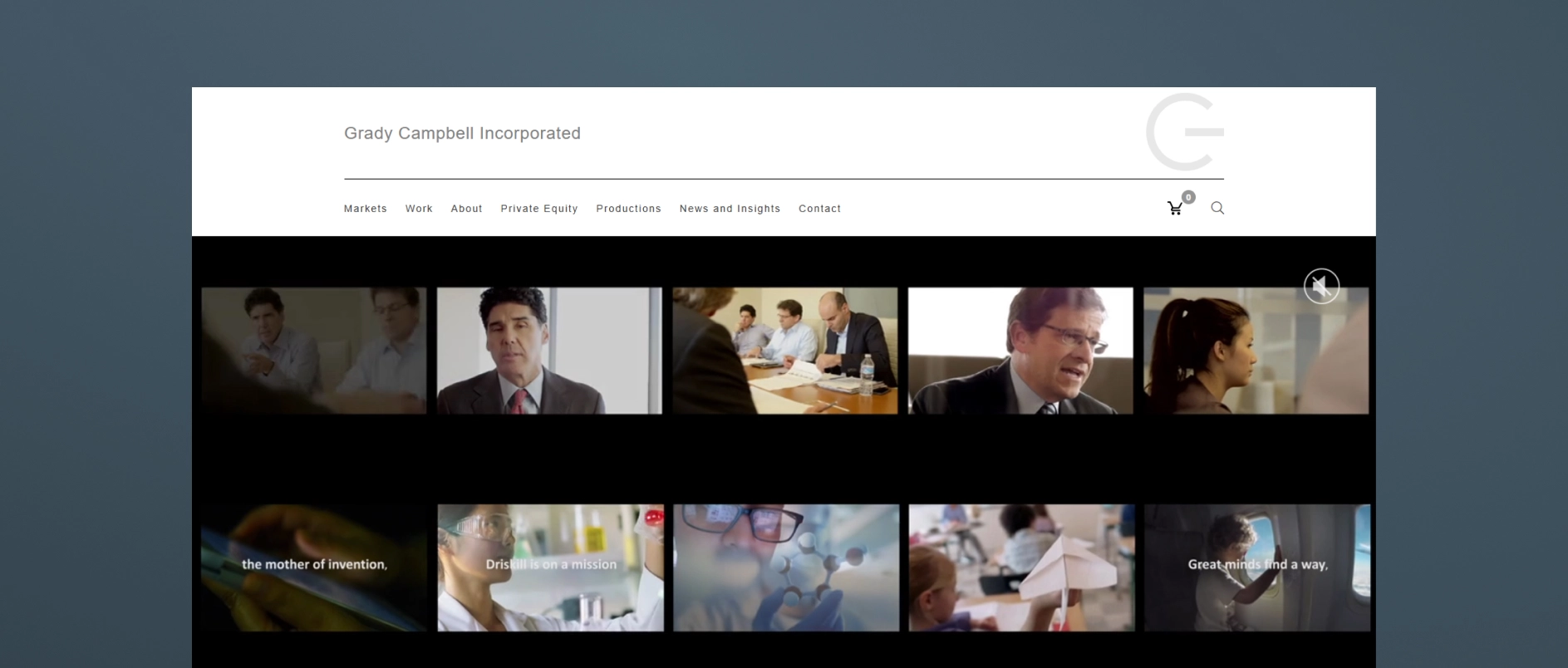
Grady Campbell is a full-service strategic branding and marketing agency with decades of experience, offering integrated brand, marketing, design, digital, content, and public-relations services. While they serve a broad set of verticals — from commercial banking to industrial, consumer, law, and technology — they maintain a dedicated private-equity vertical and specialized offerings for lower- and middle-market PE firms.
Best for Investment managers who need: integrated marketing programs, video and animation production, and public relations strategies.
3. 51 Labs
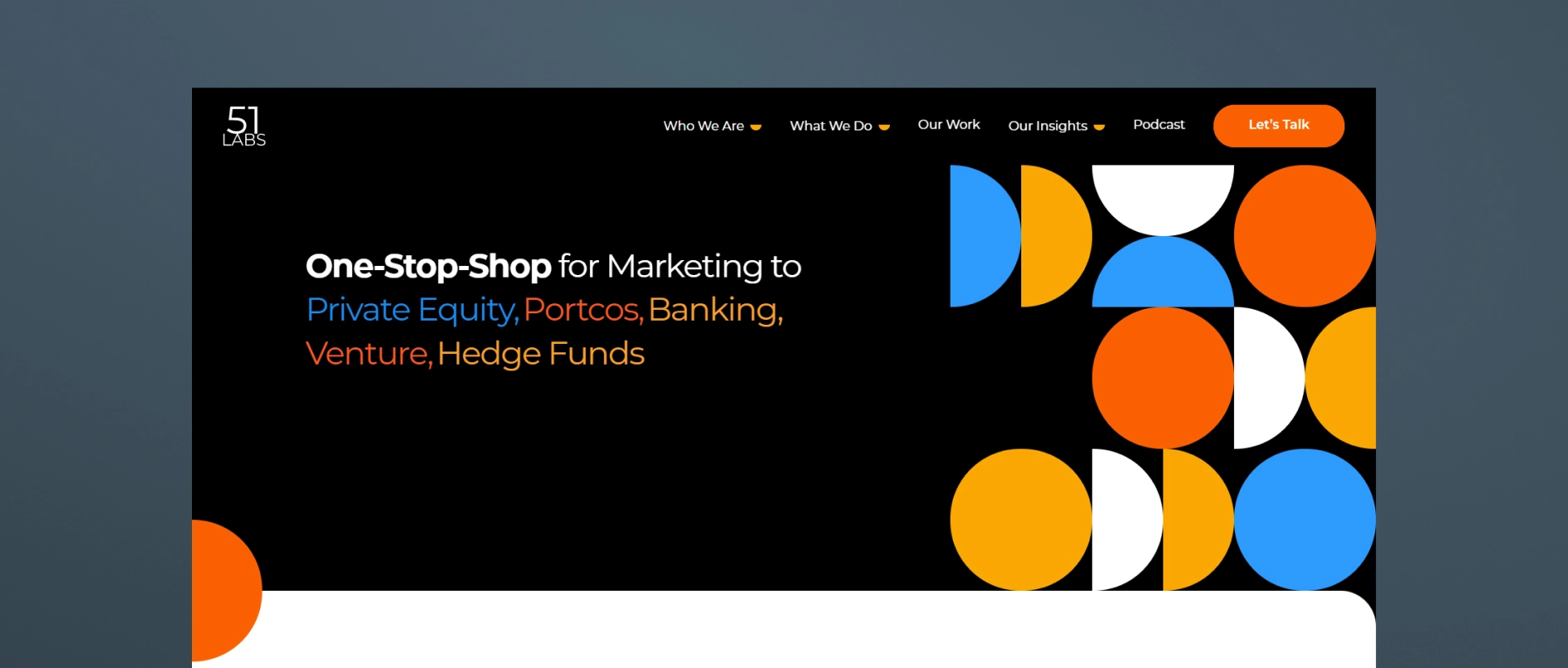
51 Labs is a modern marketing partner focused on private equity, credit, and finance firms. They combine financial-industry fluency with creative execution to deliver branding, websites, video, and content marketing. Their specialty is LinkedIn and video content, making them especially effective for firms seeking consistent visibility, platform + portfolio branding, and active engagement across digital channels.
Best for investment managers who need: a steady stream of LinkedIn content, video assets, and digital storytelling and unified branding across portfolio companies.
4. Bluetext

Bluetext is a full-service digital marketing and communications agency based in Washington, D.C., delivering branding, brand-revitalization, website design and development, content and digital marketing, thought-leadership campaigns, SEO, public relations, and demand-generation services.
Best for investment managers who need: pipeline building, deal-flow generation, and ongoing visibility.
5. Bladonmore
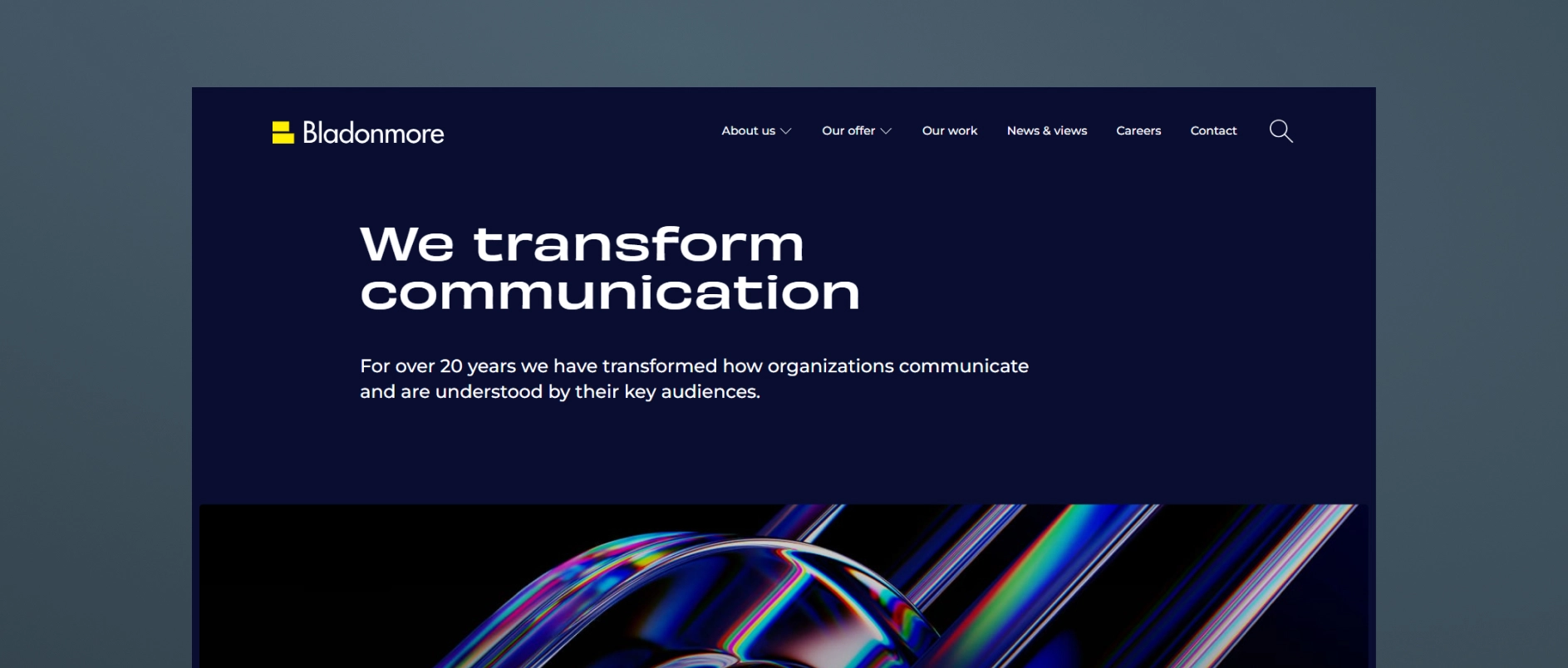
Bladonmore is a global stakeholder-communications agency with 20+ years of experience building brand, investor communications, digital content, film, and sustainability messaging for corporations, investors, family offices, and private-market clients. They combine strategy, creative design, digital execution, editorial, and multimedia to help clients articulate complex business stories.
Best for investment managers who need: institutional-grade investor communications, ESG/sustainability storytelling, global stakeholder messaging, public-market exposure, and reputation management.
6. The Durkan Group

The Durkan Group is a digital-focused design studio specializing in brand identity, UX/UI, and custom website development. They create clean, modern, user-centered digital experiences supported by thoughtful visual systems and structured messaging.
Best for investment managers who need: a prioritized user experience, intuitive navigation, and design-first identity over heavy content-generation or marketing campaigns.
7. FINE
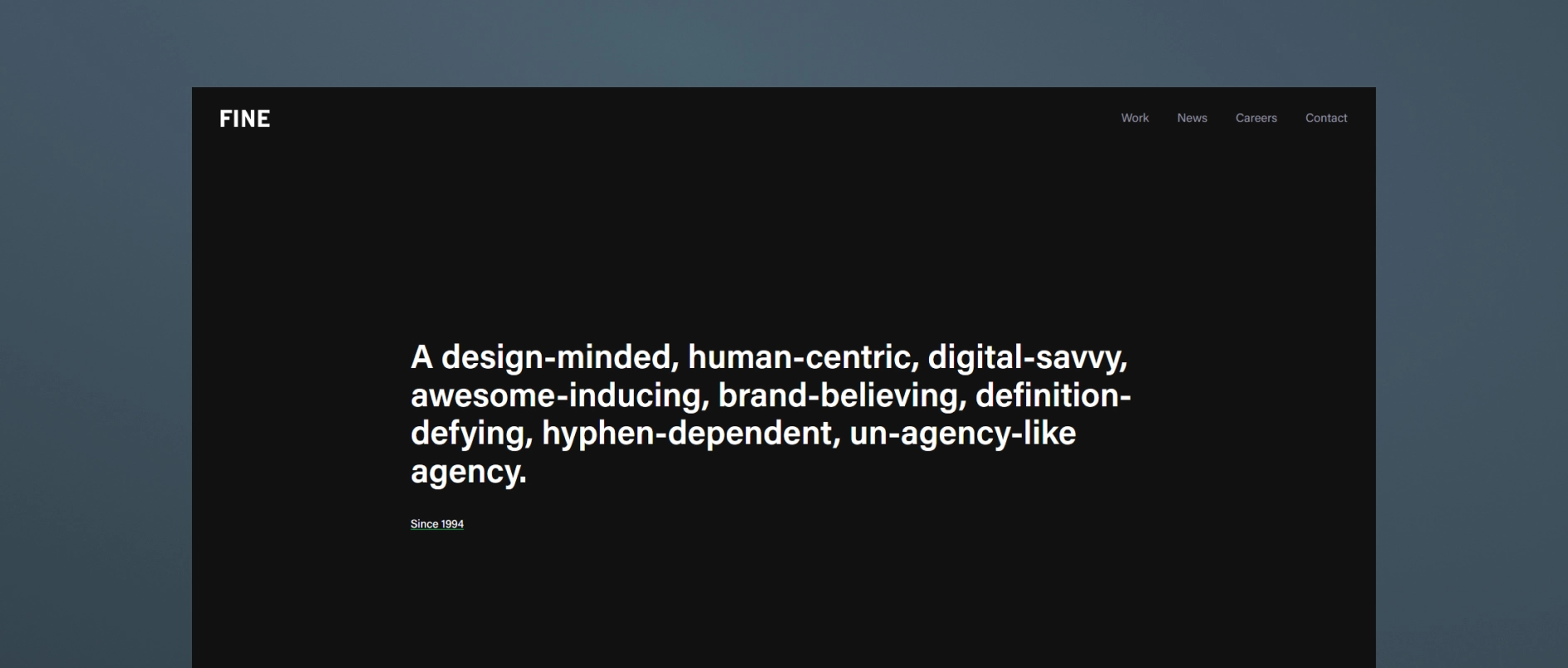
FINE is a high-end creative agency known for big-idea brand thinking, striking visual identity systems, and highly polished, immersive digital experiences. While not exclusive to investment managers, their portfolio spans hospitality, luxury, consumer, and high-growth brands - giving them a reputation for elevated, expressive, and design-rich work that stands out in any industry.
Best for investment managers who need: a bold, premium brand expression; prefer a more conceptual, high-aesthetic creative direction; or seek a visually memorable website and identity system drawn from world-class cross-industry design rather than traditional finance conventions.
8. Monogram Group
MonogramGroup is a seasoned agency (35+ years) that specializes in private equity and portfolio-company branding. They combine brand strategy, messaging, visual identity, web design, and go-to-market execution to help PE firms and their portcos sharpen positioning, support fundraising and deal sourcing, and scale brand value across the investment lifecycle.
Best for investment managers who need: an agency that can manage the full lifecycle: from pre-deal diligence and brand architecture through post-deal integration, portfolio-company identity, and exit preparation.
9. Consequently Creative

Consequently Creative is a boutique studio that focuses on crafting distinctive brand identities, visual systems, websites, and digital assets. Their work emphasizes storytelling through design, combining identity, layout, UX, photography, and motion to create brands that feel modern, cohesive, and expressive.
Best for investment managers who need: a boutique partner to develop brand and website assets with craftsmanship and attention to detail, or prefer a creative studio that can elevate the look, feel, and digital presence of both the firm and its portfolio companies without requiring full investor-materials support or institutional content strategy.
10. Clever Design

CleverDesign is a New York-based firm with decades of experience in web design, logo creation, and graphic design, and a history of working with private equity, investment banking, hedge funds, and other financial services clients. Their core offerings include websites, brand identity, logo design, pitchbooks / presentations, graphic design, and digital collateral.
Best for investment managers who need: a clean, professional, and finance-sector–tailored website or brand identity rather than full-scale content, marketing, or private-markets narrative support.

Why visual simplicity, risk framing, and trust cues shape how non-traded REITs are received
Non-traded REITs occupy a unique position in the real estate landscape: structurally institutional, but increasingly distributed through wealth channels where investor experience, communication style, and product literacy vary widely. This dual identity creates a branding challenge that many managers underestimate.
Institutional LPs typically engage materials through detailed analysis. Retail investors and their advisors may engage through a broader set of cues — clarity, structure, emotional tone, and trust signals that help them determine whether the product feels understandable and appropriate for their portfolio.
The disconnect that can arise is not about sophistication, but rather context: retail audiences interact with information differently, and their assessment process often begins with design and framing rather than deep-dive mechanics. Brands that account for this difference create a smoother path to comprehension and comfort. Brands that don’t often find their narrative obstructed before the product itself is considered.
At Darien Group, this is where we often see the greatest opportunities and the most common missteps.
1. Visual Simplicity Isn’t Cosmetic. It’s Interpreted as Clarity
Many managers entering the non-traded REIT space assume the design language of institutional materials translates naturally, but in our experience, that's not always the case. Retail-facing products benefit from a level of visual simplicity that helps audiences understand how to navigate the content before they evaluate what the content says.
The strongest examples in the category — including publicly visible leaders such as SREIT — lean heavily into:
- Clean layouts and readable type systems
- Minimalist exhibit design
- Clear sectional hierarchy
- Consistent card-based content blocks
These choices are not aesthetic flourishes; they create a cognitive environment where key ideas feel accessible. Simplicity signals intentionality, which in turn supports trust.
Managers often overestimate how much information must appear on a page for it to feel “institutional.” In non-traded REITs, disciplined reduction, not embellishment, is the more effective trust cue.
2. Risk Framing Must Be Structured, Not Softened
Non-traded REITs are disclosure-rich products by design. Retail investors and advisors expect transparency, but the sequence in which risk information appears meaningfully shapes how it is received.
Effective risk framing in this channel typically includes:
- A high-level articulation of what the REIT aims to deliver
- A balanced summary of risk considerations written in plain language
- Contextual exhibits that help translate how the strategy behaves across cycles
- A consistent format across reports, fact sheets, and microsites
What retail audiences value is not a reduction of risk language, but a responsible arrangement of it. Disclosures that appear chaotic, overwhelming, or visually disjointed can unintentionally heighten perceived risk, even when the content itself is standard.
3. Disclosure-Heavy Design Requires Intentionality
In the institutional world, extensive disclosures are expected at the end of every document. In the non-traded REIT environment, disclosures often accompany nearly every asset-level chart, performance reference, and distribution statement.
This density makes design essential.
Managers who treat disclosures as an afterthought often end up with:
- Layouts that feel crowded
- Pages where the eye doesn’t know where to land
- Important ideas overshadowed by formatting issues
By contrast, leader-class programs tend to:
- Integrate disclosures harmoniously along the bottom grid
- Use scale, spacing, and typography to maintain balance
- Keep the primary narrative readable and intact
Good disclosure design doesn’t make a REIT look promotional; it makes it look prepared.
4. Trust Cues Are Accumulative, Not Singular
Retail trust is built across moments, not from a single design element or line of copy. When we audit non-traded REIT programs, the strongest performers usually exhibit consistency across:
- The homepage, which explains the strategy succinctly
- The fact sheet, which is navigable in under a minute
- Quarterly updates, which follow a repeatable structure
- Portfolio pages, which avoid overwhelming detail and highlight what matters
- Subscription pathways, which feel intuitive and friction-light
Trust is often compromised when even one of these elements diverges stylistically or structurally from the others. A cohesive ecosystem communicates reliability.
This is where many managers misjudge perception. Retail audiences rarely articulate these inconsistencies, but they do feel them. Design alignment across touchpoints communicates professionalism just as powerfully as performance charts.
Closing Thought
Non-traded REITs operate in an environment where branding and communication need to support the underlying strategy — not distract from it or prevent an investor from engaging with it. The managers who succeed in this channel are not those who oversimplify their story or over-polish it, but rather those who design for comprehension, structure for transparency, and communicate with calm authority.
Retail investors and advisors are not evaluating the same way institutions do. They are evaluating in a way that is appropriate to their role, their workflows, and the medium through which these products are distributed.
In a crowded landscape, brands that understand this distinction and build with intention create an immediate advantage.
Why clarity, design discipline, and site architecture now determine whether a product earns advisor mindshare
Over the past decade, real estate capital formation has steadily diversified into the wealth channel. RIAs, independent broker-dealers, wirehouses, advisor platforms, and high-net-worth individuals are now playing a growing role in non-traded REITs, interval funds, DST programs, and private vehicles structured for individual investors.
This shift comes with significant brand implications. Wealth-channel participants interact with information differently from institutional LPs, and they engage with materials in different formats and at different depths depending on context. As a result, managers expanding into this ecosystem often benefit from rethinking how their digital presence, collateral, and product communication are structured.
In the institutional world, the investment team “owns” the narrative. LPs read deeply, conduct heavy diligence, and often already have internal frameworks for evaluating real estate risk. In the wealth channel, the advisor owns the narrative, and often must communicate it to clients who may never read the deck, never attend a webinar, and never browse the website beyond a single page.
The burden on brand and communication is completely different.
Design matters more.
Clarity matters more.
Structure matters more.
And the bar for misinterpretation is significantly higher.
Why the Wealth Channel Behaves Differently
The wealth channel is not a monolith, but several consistent patterns influence how managers are evaluated and what a brand must accomplish:
- Advisors often act as intermediaries rather than end users.
They are evaluating not only whether they understand the strategy, but whether they can communicate it clearly to clients. Materials that require heavy translation create friction. - Many advisors are cautious about product selection.
Protecting client relationships is central to their role. When a manager is less familiar or a product is newer, clarity and design quality can help reduce perceived complexity. - Advisors manage significant information flow.
Time constraints mean many will review a factsheet or summary first before deciding whether to explore further. This heightens the importance of efficient, well-structured materials. - Products often compete in “menu environments.”
When advisors review a product, they commonly compare it to others available on their platform. These comparisons may happen quickly, so visual and narrative clarity play an outsized role in first impressions.
The Advisor Evaluation Process (Realistic, Not Idealistic)
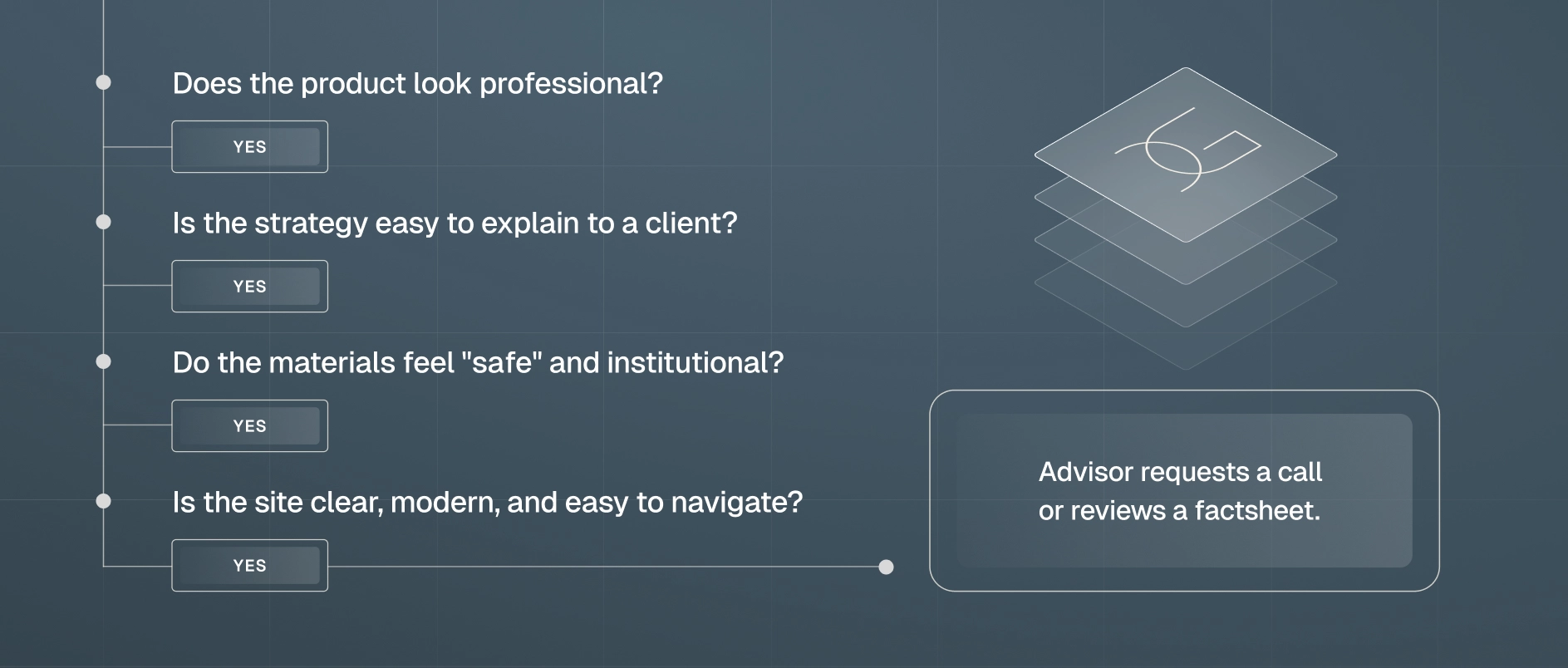
If any step breaks, the product gets deprioritized.
The Brand Implications of Wealth-Channel Capital
The shift toward advisors changes not just the marketing layer, but the brand architecture that supports the product.
As Director of Brand Strategy at DG, these are the most important implications I see across our real estate clients:
1. Design Discipline Is Not Optional. It’s a Trust Signal
Clean design is evidence of operational maturity. Cluttered design or dated formatting has an outsized negative effect.
This is especially important in real estate categories where the underlying assets do not always photograph well — older multifamily, non-glamorous industrial, retail, or niche strategies. As discussed across DG’s RE series, poor photography can unintentionally shift perception more than teams realize.
For wealth-channel products:
- Typography must be readable.
- Layouts must feel institutional, not promotional.
- Disclosures must be visually integrated, not overwhelming.
- Exhibits must be simple enough to be screenshotted and passed along.
In this channel, design is the message. It communicates professionalism more quickly than the investment story itself.
2. Website Architecture Now Matters as Much as the Deck
Websites are often the first point of entry or impression of your firm among audiences in the wealth channel. They might:
- Google the product.
- Land on your website.
- Scan for 10–15 seconds.
- Attempt to understand the structure.
- Decide whether it feels institutional, clear, and credible.
This creates three requirements:
A. A dedicated microsite for each product (not buried inside the main firm website)
The parent website can remain institutional and thesis-forward.
The product microsite must be:
- simple,
- compliant,
- disclosure-heavy but digestible,
- visually clean,
- and easy for advisors to send as a link.
B. Navigational clarity
Avoid confusing menus, non-descript headers, and inconsistent user experiences.
The website experience should clearly guide the user to exactly where you want them to go and what they need to find.
C. A clear “Advisor Path”
Many advisors scan sites looking for:
- fact sheets
- share class details
- distribution history
- performance summary
- subscription mechanics
If they can’t find it quickly, they assume the manager isn’t ready for the channel.
The Four-Page Microsite Model
- Overview Page
- Introduce the product and its strategy in concise bullet points
- Why now, and why you
- Who it's for
- Clear product summary card
- Platform Page
- If the product is a part of a larger platform or parent company, clearly explain that relationship and leverage it as a differentiator.
- Portfolio Page
- Simple visuals
- High-level methodology
- Key exhibits
- Risk summary
- Shareholder/Advisor Resources
- Factsheets
- Subscription instructions
- Webinar replays
- Contact information
Anything beyond this should be optional, not required.
3. Messaging Must Be Cycled Down Without Being Watered Down
Advisors do not need a deep dive on:
- absorption patterns
- debt service dynamics
- submarket migration
- underwriting philosophy
- property-specific turnaround mechanics
They need a clean, high-resolution explanation of what the investment does and why it fits into a client’s portfolio.
Real estate managers often mistake “simplified” for “less sophisticated.”
In this channel:
Simplicity is a sophistication signal.
The messaging arc should cover:
- what problem the product solves
- how it behaves in a portfolio
- when it performs well
- how risk is mitigated
- how income is generated
- what the structure allows or prohibits
This is the clarity-first approach DG reinforces across the real estate series.
4. Wealth-Channel Products Require Their Own Visual Language
Institutional brands should feel strategic, investor-first, and thesis-led.
Wealth-channel brands require a different emotional calibration:
- calmer
- more conservative
- more spacious
- more “financial-professional” than “real-estate-operator”
- and with greater visibility around disclosures
This doesn’t require a new brand, but it does require a parallel brand system specifically engineered for the advisor environment.
This is one of the biggest mistakes managers make: they try to force institutional identity into a retail context.
The result is either too much gloss (seen as promotional) or too much complexity (seen as risky).
A separate visual system solves this.
5. Reporting Cadence Becomes Part of the Brand
Institutions are comfortable with quarterly cycles and asynchronous communication.
Advisors expect:
- monthly updates,
- clear thought leadership,
- clean NAV summaries,
- distribution clarity,
- quick-to-read news,
- and consistent templates.
Inconsistent reporting reads as disorganization, and in a channel where advisors are protecting client relationships, inconsistency is a non-starter.
How Advisors Internally Categorize Managers
“Clean and reliable”
→ Feels institutional
→ Easy to explain
→ Low perceived risk
“Good strategy, messy materials”
→ Harder to recommend
→ Increased advisor liability
→ Lower allocation likelihood
“Complex story, unclear materials”
→ Not worth the effort
→ Advisor defaults to bigger brands
The story matters, but the system that carries the story matters more.
6. Advisors Don’t Benchmark You Against Peers. They Benchmark You Against Platforms
Advisors compare materials to:
- Blackstone
- Starwood
- Carlyle
- Nuveen
- JLL
- Platform-approved giants
This means even smaller managers must look platform-ready, even if their product is newer or more specialized. Your brand and materials must do more heavy lifting.
Closing Thought
The increasing importance of the wealth channel is a structural shift in real estate capital formation. Managers who design their materials around the needs of advisors, not just institutions, tend to see stronger engagement. In this environment, brand is not merely aesthetic; it supports distribution by reducing friction and enhancing clarity. As more real estate strategies converge in messaging, managers who combine thoughtful design with well-structured communication will stand out long before a meeting is scheduled.
Why narrative clarity creates the most upside where few managers are looking
Real estate tends to move through recognizable cycles of allocator interest. When a sector is performing well, many managers focus their storytelling around it. When a category faces headwinds, such as hospitality or office in recent years, managers often communicate less actively while waiting for sentiment to stabilize.
At Darien Group, we believe overlooked and contrarian sectors often offer some of the clearest opportunities for managers who present a structured, measured point of view grounded in fundamentals and cycle awareness.
These strategies themselves aren’t new. What is evolving is how allocators evaluate them and the degree to which clear, well-sequenced communication can influence how a strategy is initially perceived.
Contrarian doesn't necessarily mean complex.
Overlooked doesn't necessarily mean underperforming.
And niche doesn't automatically mean “too small to be institutional.”
In many cases, these categories simply suffer from inconsistent framing or materials that create ambiguity rather than clarity.
Why Contrarian Sectors Struggle With Positioning
Contrarian strategies are rarely dismissed because the mechanics are flawed. More often, the narrative arrives without enough structure or context for an allocator to evaluate it efficiently. That perception forms early, often before the diligence formally begins.
Across overlooked sectors such as manufactured housing, RV parks, senior housing, certain retail categories, last-mile industrial, adaptive reuse, and cold storage, three challenges appear frequently:
- They sound “niche” even when the scale is institutional.
For instance, a manufactured-housing strategy may reach meaningful AUM, but if the narrative leans too heavily on terminology that evokes consumer stereotypes rather than investment characteristics, it can shape initial impressions in unhelpful ways. - Managers may overestimate how much pattern recognition LPs have in newer or less trafficked categories.
Many allocators have deep familiarity with multifamily or core industrial. Fewer have equivalent working knowledge of RV parks or cold storage. This simply increases the need for context and clarity. - Materials often drift toward extremes: too operational or too conceptual.
Operator-driven teams may emphasize micro-level details; finance-driven teams may rely too heavily on abstract language or dense data. The most effective narrative typically lives between the two.
The Early Moment That Shapes Perception
As noted in one of our previous posts, What Real Estate LPs Look For in the First 30 Seconds, LPs make their first judgments quickly, based on clarity, category fit, and institutional cues.
Overlooked sectors have a slightly higher burden at this early stage because the allocator is often trying to determine:
- Is this strategy appropriately sized and structured?
- Are the demand drivers intuitive based on the information provided?
- Does the manager present as investor-first vs. operator-first?
- How does the strategy relate to current cycle conditions?
When the materials lack structure or visual discipline, allocators may view the strategy as higher-risk than intended. Clear framing helps prevent that gap.
How LPs Sort Contrarian Strategies (A Simple Decision Map)
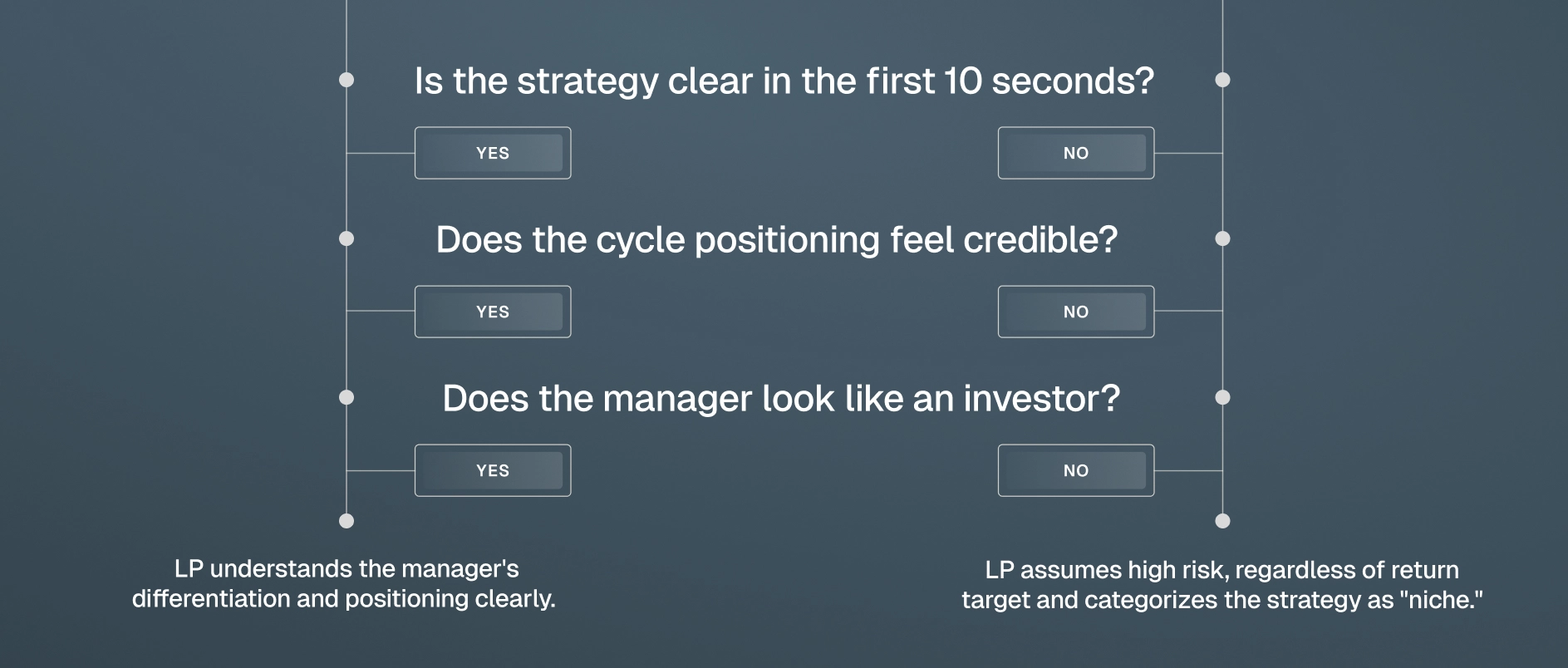
The key takeaway?
In contrarian categories, clarity determines whether the LP even considers the idea, not the strategy itself.
Where DG Sees the Biggest Opportunities
Below are four sectors where managers can unlock disproportionate benefits simply by structuring and presenting the strategy well.
1. Manufactured Housing
“Affordable housing with structural tailwinds” is not a thesis by itself.
Most manufactured-housing stories lean on affordability and supply-demand imbalance. A valid investment thesis, but not a sufficient or differentiated fundraising narrative.
What LPs actually want to know:
- What’s the consolidation opportunity?
- How fragmented is the market in your geography?
- Where does capex show up in NOI?
- How stable is tenancy compared to workforce multifamily?
- What are the regulatory dynamics?
A more compelling positioning ties these mechanics to investor outcomes:
Positioning Example (Stronger)
“We target supply-constrained regions where the delta between manufactured housing rents and Class B multifamily rents is widening, creating tenancy stability and predictable cash flow.”
Clear. Cycle-responsive. Repeatable.
2. RV Parks & Outdoor Hospitality
A category with powerful demographic drivers, but terrible storytelling.
This sector often suffers from one of two narrative extremes:
- overly lifestyle-driven (“people love the outdoors”), or
- overly operational (“we upgrade utility pedestals and optimize transient mix”).
Neither builds institutional trust.
What works:
- A demand-side argument (demographics, mobility trends)
- A supply-side argument (zoning constraints, limited new stock)
- Operational levers that drive NOI predictability (recurring revenues, membership programs)
- A clear explanation of seasonality and how it’s managed
A strong RV-park strategy often looks less like hospitality and more like annuity-like outdoor real estate, if the narrative is structured correctly.
3. Last-Mile Industrial Conversions
High-opportunity, high-friction — until articulated clearly.
Many managers describe these strategies as “creative repositioning,” which LPs interpret as entitlement or construction risk. The fix is simple:
Lead with the demand driver, not the physical conversion.
Example:
- E-commerce penetration in a specific metro
- Vacancy dynamics within 3–5 miles of population centers
- The pricing spread between obsolete flex and modern small-bay industrial
- The operator advantage in lease-up velocity
The strategy becomes far more investable the moment it’s framed as a logistics access story, not a building transformation story.
4. Cold Storage & Food Logistics
A sector defined by operational nuance, which is often buried or overcomplicated.
Cold storage is not a bet on temperature-controlled space. It’s a bet on:
- throughput efficiency
- tenant stickiness
- proximity to distribution nodes
- barriers to replacement
- energy efficiency and capex discipline
The challenge is expressing this without 40 pages of technical detail.
Here, sequence matters:
Cycle → Demand Drivers → Operational Differentiators → Geography → Team Edge
When the story is structured this way, the strategy feels less like infrastructure and more like a durable real estate allocation.
The Narrative Pyramid for Contrarian Sectors

Overlooked sectors fail when teams invert this pyramid, diving into operational nuance first, market dynamics last, and team fit not at all.
Why Contrarian Strategies Benefit Most From Professional Branding
Contrarian strategies often have more upside but also more perception risk.
That makes brand, materials, and clarity disproportionately important.
Here are three advantages we see our clients gain through stronger, more compelling storytelling:
1. A structured, cycle-aware thesis that feels rational, not promotional
Contrarian stories collapse when they sound defensive. They succeed when they sound analytical, structured, and grounded.
2. A brand system that avoids developer cues
Overlooked sectors are often operationally heavy. That creates risk of “operator” or “project” optics. A strong brand system neutralizes this immediately.
3. Materials that help LPs visualize the strategy, even in niche categories
Contrarian strategies require careful visual curation:
- fewer literal property shots
- more abstraction, process clarity, geographic logic
- better use of exhibits instead of paragraphs
Visual discipline makes unfamiliar categories feel investable.
Are LPs Able to Answer These Four Questions About Your Strategy Quickly?
- Why this sector now?
- What risk is priced? What risk is mitigated?
- Why is this team the right operator?
- How does this strategy behave across cycles?
If the materials don’t make these answers obvious within ~3 pages or one homepage view, LPs disengage, even if the underlying strategy is excellent.
The Opportunity: Narrative White Space
The biggest advantage for contrarian or overlooked strategies is simple:
very few managers tell these stories well.
Most rely on intuition or operator instinct. Very few build an institutional-grade narrative system that:
- clarifies the demand driver
- articulates the opportunity cleanly
- addresses the cycle responsibly
- positions the team as uniquely suited
- presents the information with discipline
That’s where the upside is.
Closing Thought
Contrarian and overlooked real estate sectors aren’t inherently niche; they are often simply less familiar. When the materials are modern, the framing is clear, and the investment case is presented with balance rather than defensiveness, these strategies can transition from peripheral to highly compelling. In real estate, clarity supports legitimacy, and in underexplored sectors, that legitimacy can translate into meaningful opportunity.