.jpg)
Private Equity Insights
Darien Group exists to bridge the gap between exceptional design capabilities and private equity communications. Our library of resources serves as a practical guide for firms looking to refine or redevelop their brand and ensure their story resonates with target audiences.

Featured Videos






Most emerging managers think design in a pitchbook is about aesthetics — color choices, layout, typography, the general look and feel. LPs don’t experience it that way. They don’t evaluate pitchbooks on beauty; they evaluate them on intent. Design becomes a form of pattern recognition: a quick way to assess whether the GP is organized, credible, and attuned to institutional expectations. Design is not the wrapper around the story. It is the first operational artifact an LP encounters, and it tells them far more than most managers realize.
1. Design Signals Whether the GP Understands the Institutional Environment
LPs have seen thousands of pitchbooks. They know what a mature deck looks like, and they know what an improvised one looks like. When a deck feels under-designed or oddly assembled — misaligned charts, inconsistent fonts, clashing iconography — LPs instinctively read that as a lack of institutional fluency. They don’t think, “This is ugly.” They think, “This manager hasn’t quite internalized the norms of our world.” That inference may be unfair, but it is reliable. Design is not just visual styling; it is an indicator of whether the GP knows the rules of the professional arena they’re entering.
Emerging managers sometimes underestimate this because they have worked in environments where someone else handled the brand infrastructure, and materials arrived pre-structured. When they go solo, they realize how much design literacy they had been absorbing subconsciously. LPs can tell when that literacy is missing.
2. Overdesign Is as Damaging as Underdesign
If one group of emerging managers errs on the side of minimalism, another group errs on the side of ornamentation — especially in real estate. They want the deck to look like a gorgeous property brochure because that’s what they’re used to seeing in the marketing of assets. But a glossy, hyper-stylized pitchbook does not communicate what a fund pitchbook needs to communicate. It doesn’t say, “We are serious stewards of institutional capital.” It says, “We know how to market assets,” which is a different skill entirely.
On the private equity side, overdesign appears in subtler ways: too many color gradients, heavy motion-like effects, fonts that feel like they belong in a consumer brand rather than in institutional finance. These are distractions, not advantages. LPs don’t want to think about design; they want design to make thinking easier.
Good design in a pitchbook is invisible. It creates clarity without calling attention to itself.
3. PowerPoint Is Not a Limitation — It Is an Expectation
Every now and then, a new manager will ask us to build their pitchbook in InDesign because they want it to look “more premium.” And yes, InDesign can produce beautiful documents. But these requests are almost always rooted in misunderstanding. LPs expect pitchbooks in PowerPoint because PowerPoint is editable, familiar, and legible in the context of diligence. A deck that is too glossy or too static can feel like it’s trying to compensate for something. LPs want substance, not spectacle. The format shouldn’t be the memorable part.
This is not to say pitchbooks should be plain. They should simply be aligned with what the category expects. In an emerging manager context, memorability should come from the ideas, not the packaging.
4. Consistency Across Materials Is a Signal of Organizational Maturity
LPs don’t evaluate your pitchbook in isolation. They triangulate it with your website, your bios, your data room, and even your email signature. When these elements are aligned, they signal discipline. When they are not, they signal drift. A pitchbook that looks one way while the website looks another forces the LP to reconcile two versions of the same firm. Most won’t bother.
This is especially true when the deck’s tone diverges from the website’s tone. If the deck is conservative but the website is modern, or the deck is overly technical while the digital presence is clean and straightforward, LPs interpret that inconsistency as a lack of self-understanding. In reality, the GP may simply be iterating quickly. But to LPs, it reads as fragmentation.
The pitchbook is where narrative and design converge most visibly. When it matches the rest of the firm’s digital ecosystem, LPs feel the underlying cohesion. When it doesn’t, they feel the instability.
5. Poor Design Doesn’t Make You Look Unattractive — It Makes You Look Unready
Emerging managers often think bad design will make them look unsophisticated. That’s not the real issue. Bad design makes you look unready. It signals that the GP has not taken the time to structure their story, their visual system, or their materials in a way that supports institutional evaluation. Even something as simple as a mismatched chart or a slide that feels “borrowed” from an old deck sends a quiet signal: this manager is still assembling themselves.
LPs may not consciously register these cues, but subconsciously they draw inferences: If the deck is disjointed, is the process disjointed? If the exhibits are sloppy, are the underwriting memos sloppy? If the narrative is unclear visually, is it unclear operationally? None of this is determinative. But all of it is suggestive.
Emerging managers underestimate how quickly these inferences form and how slowly they dissipate.
Closing Thought
Design in investor materials is not cosmetic. It’s structural. It shapes how LPs absorb your story, how they interpret your maturity, and how they assess your readiness for institutional capital. The goal is not to impress; the goal is to make the narrative unmistakably clear. When a pitchbook feels intentional, coherent, and appropriately restrained, LPs assume the same about the underlying firm. And for emerging managers, that assumption is often the bridge between being viewed as “interesting” and being viewed as “investable.”



Private equity and alternative investment firms often come to us at the exact moment when their brand foundation is starting to feel too narrow for where the firm is heading. In these early conversations, we hear a familiar mix of excitement and uncertainty. Some clients arrive with a few potential names already chosen. Others have no formal collateral at all. Most know exactly how they want to be perceived, but are unsure how to translate that into a name, identity, and digital presence that feels intentional, credible, and lasting.
These discussions often surface deeper strategic questions. How should a new firm position itself relative to its legacy. How do you craft a visual identity that feels distinct without drifting into abstraction. How do you build a website that supports fundraising and deal conversations at the same time. Over the years we have noticed patterns in how successful firms navigate these decisions.
This is a look behind the curtain at the conversations that shape a brand before any pixels or pages exist.
Why Naming Is a Strategic Exercise, Not a Creative Guessing Game
We have had many founders say something like, “We have three names we like. Can you tell us which one is strongest.” What they are really asking is whether their instincts align with how the market will interpret the name. We see this across nearly every naming engagement. The debate feels tactical, but the underlying questions are philosophical. What makes a name credible. What makes it durable. What will it signal in a room full of LPs or founders.
We have written before about how naming actually works in investment management, and why the search for the perfect name is often a distraction from the decisions that matter. Read more in our piece, The Myth of the Perfect Name in Investment Management.
Our own experience has shown that naming is not a subjective preference exercise. It is a strategic filter. The categories we explore during discovery determine the types of names that make sense for the firm. The name chosen should reflect how the firm wants to be understood by investors, founders, and partners for years to come.
The Branding Process Firms Respond to Most
Many private equity firms initially approach branding with a desire for speed. They quickly learn that momentum requires structure. When we outline a typical process, clients often say this is the first time branding has felt navigable.
The progression matters. Conversations during discovery shape the takeaways that inform early positioning. That positioning informs creative direction. That direction shapes the first versions of the homepage. Those prototypes give structure to the written narrative. Each step compounds the previous one and reduces revision cycles later.
Firms often tell us that this stage is where they finally see their story reflected back with clarity. The language begins to align with the identity they want to project. The early visuals define the posture they intend to occupy in the market. Branding is not a linear checklist. It is a sequence of calibrations.
How PE Firms Should Think About Website Strategy During a Brand Build
In nearly every early meeting, we hear a version of the same request. A firm needs a first-phase website ready for a capital conversation, or a homepage that can support active deal sourcing. The tension is familiar. Firms want the long-term brand to be thoughtful, but they also need something credible in the near term.
The solution is structured sequencing. We often begin with strategic website planning, even before the full identity is complete. This includes page hierarchy, story architecture, and functional planning. Once those decisions are aligned, we create an interactive prototype that lets the working group experience the site before development begins.
Clients consistently say this is one of the most clarifying steps. Seeing the site in motion, even in grayscale, helps them understand how the brand will behave digitally. It also compresses future revisions because structure, flow, and messaging are already aligned.
What Firms Can Prepare Before a Brand Engagement Begins
Some teams have a library of strategy decks and positioning language ready to share. Others have only a broad idea of how they want to present themselves. Both starting points are workable. What matters more is assembling the reference points that help tune early creative decisions.
Screenshots of sites they admire. A list of attributes they want the brand to convey. A few inspirational materials saved over the years. These clues provide direction for creative range finding and avoid unnecessary exploration.
More important is early access to leadership. Five or six hours of interviews across senior partners, junior team members, and operational leads often produces sharper insights than any written document. Those themes become the foundation of the brand.
The Less Visible Work That Ensures a Smooth Brand Build
Clients often assume the most challenging work lies in the creative expression. In reality, the leverage comes from the operational details. Clear working-group structure. Defined decision-making protocols. Predictable handoffs between strategy, design, and development. A shared Dropbox environment for materials. A scheduling process that eliminates friction.
When firms reflect on successful brand projects, they rarely point to a single deliverable. They point to the experience of the process. They describe predictability, clarity, and momentum.
What These Conversations Tell Us About Successful PE Branding Today
Private equity branding is changing. Firms value substance over theatrics. They want names that reflect intent. They want websites that guide LPs and founders toward meaningful conclusions. They want identities that feel modern and calibrated to their worldview. And they want narratives that reflect the seriousness of their work.
Early branding work often reveals the same underlying desire. Firms want a structure that helps them understand themselves with precision. A strong brand is not decoration. It is a framework for how a firm shows up in the world and the expectations it sets for its partners.


There is a juncture in the life of a private equity firm that does not appear on the org chart or in the fundraising timeline, yet it carries enormous strategic weight. It arrives when the internal complexity of the firm surpasses the simplicity of the story it tells about itself.
We see this most clearly in firms that have evolved beyond a single investment style. They add new strategies, expand operator networks, pursue more creative transaction structures, or institutionalize their team. Internally, the firm becomes sharper and more sophisticated. Externally, it still communicates like the earlier version of itself.
The result is an informational mismatch.
This article examines the specific scenarios in which this happens and why the solution requires more than new language. It requires a restructured mental model of how the firm explains itself to the outside world.
1. The Multi-Strategy Drift: When a Firm Builds Two Engines but Describes Only One
A common pattern appears when a firm that built its reputation through platform investing adds a second engine. It might introduce:
- an asset-level solutions strategy
- a structured capital sleeve for operators
- a secondary program designed to purchase equity at a discount
- a co-investment structure that complements the core strategy
Inside the firm, these strategies share logic. They draw on the same operators, the same information pathways, or the same pattern recognition.
Outside the firm, they appear unrelated.
The typical scenario looks like this:
- A firm’s asset-level work depends on insights drawn from its platforms.
- Its platform work benefits from relationships created through solutions-oriented capital.
- Its team learns across strategies in ways that accelerate underwriting.
Yet the external materials describe these strategies in separate silos. The audience cannot see the relationships, so the firm appears more fragmented than it is.
This fragmentation is not a branding problem. It is an architectural problem.
2. The Operator-First Reality: When Your Competitive Advantage Is Invisible Externally
Many firms derive real advantage from their operator relationships. Operators provide early visibility into opportunities, real-time context on market conditions, and nuanced feedback that strengthens underwriting.
Yet this operator-centered model rarely appears in firm messaging. Instead, communication defaults to fund size, sector focus, and geography.
We often see a scenario like this:
A firm sources half its best opportunities from operators long before intermediaries circulate them. Its diligence processes rely on direct conversations with management teams who trust the firm’s approach. Its multi-year relationships lead to repeated opportunities within the same network.
But none of this shows up in the firm’s external explanations. The operator network is treated as incidental rather than central.
Once articulated clearly, this advantage reshapes how intermediaries engage, how operators reach out, and how LPs interpret the strategy. A firm is not differentiated by the existence of an operator network but by the meaning of that network within its investing model.
When the firm finally explains this clearly, the market recalibrates its understanding.
3. The Maturity Gap: When an Institutional Firm Communicates Like an Early-Stage Firm
As firms scale, they adopt new structures. They introduce investment committees, create value-creation frameworks, develop internal reporting cycles, and build differentiated roles across the team.
Yet externally, the firm may still present itself as a small specialist with a simple model.
This creates a misalignment with consequences:
- LPs cannot fully see the sophistication that now exists
- Operators underestimate the firm’s ability to support them
- Candidates misunderstand what the role will require
- Advisors send opportunities that do not match the evolved mandate
The firm operates at a higher level than its communication suggests. The gap between internal structure and external messaging becomes a source of inefficiency.
The firm is, in effect, outgrowing its own story.
4. The Understatement Paradox: When Restraint Collides With Institutional Expectations
Many firms prefer a restrained identity. They value discretion, focus, and a low-contrast style. They resist anything that feels promotional.
This preference is deeply rooted in the middle market.
However, restraint does not eliminate the need for clarity. It simply constrains the methods available to provide it.
We often hear something like this:
A firm wishes to remain understated while also wanting better recognition among operators, clearer articulation of its strategies, and materials that reflect its maturity.
This is not a contradiction.
It is a structural challenge.
Understated firms do not need more noise. They need sharper explanations. They benefit from organized information, precise framing, and communication that mirrors their temperament without diminishing their sophistication.
5. The Missing Framework: When Everything a Firm Says Is Correct but Not Connected
Many firms share accurate details about themselves. They describe sectors, strategies, geographies, team backgrounds, and values.
Yet what the audience is seeking is the foundational idea that connects these components.
For example:
- A firm may appear diversified across nine asset categories, when in reality its exposure reflects a highly focused operator sourcing model.
- A firm may appear geographically scattered, when in truth its operators create a unified map of where demand exists.
- A firm may appear to run unrelated strategies, when the strategies reinforce one another in ways that improve decision making.
The facts are sound. The interpretation is incomplete.
Without a framework that explains how the parts relate, the message relies on the audience to infer the structure, and most will not.
Conclusion. The Most Strategic Firms Rebuild Their Message When Their Structure Evolves
Private equity firms change. They implement new strategies, deepen relationships with operators, enhance internal processes, and refine their investment discipline. What often remains unchanged is the external message that once served the earlier version of the firm.
Eventually, the firm reaches a point where the old message obscures the current strategy. The organization becomes more sophisticated, but the communication remains static.
The firms that address this inflection point do not simply revise language. They reorganize how they explain themselves. They establish a structured foundation that accurately reflects the firm's actual design. They make the internal logic visible and accessible.
A firm that communicates its structure with precision is interpreted with precision. A firm that expresses its model clearly is understood quickly and accurately. A firm that reorganizes its message to match its evolution operates with fewer barriers and greater momentum.


In recent years, we have seen a noticeable shift in how a subset of private equity firms chooses to present itself. While the broader market often rewards volume and visibility, many middle-market managers are taking the opposite route. These firms are opting for a quieter, more intentional brand strategy that mirrors how they operate and how they want to be perceived.
Their goal is not to reduce communication. Rather, it is to communicate with purpose. In an industry defined by relationships, the measured approach can be more effective than traditional forms of self-promotion.
1. Operators are responding to firms that present themselves as true partners
Across conversations with operators, a pattern consistently appears. They prefer investors who feel collaborative, approachable, and grounded in day-to-day realities. They are less interested in firms that rely on high-gloss positioning or the familiar language of financial prestige.
A quieter brand strategy sends a different signal. It tells operators that the firm values consistency over spectacle, clarity over flourish, and long-term partnership over transactional behavior. This aligns with what many operators say they want from their capital providers and often influences how they evaluate potential investment partners.
Quiet, in this sense, communicates steadiness.
2. A more restrained brand style helps firms stand out in a crowded middle market
Many middle-market firms struggle to express what makes them distinct. Their strategies, sector interests, and value creation processes often overlap. In this environment, louder communication does not guarantee recognition.
The firms choosing a quieter approach tend to explain their strategies with more precision. They describe their sourcing methods, their focus areas, and the reasoning behind their investment structures in ways that feel accessible and grounded. This simplicity clarifies their position in the market and gives the audience the context it needs to understand the firm’s strengths.
By reducing noise, they sharpen their message.
3. Firms with multiple strategies benefit from a clean, unified explanation of how they operate
Many firms now manage more than one strategy. Platform investing might sit alongside structured solutions, secondaries, or asset-level opportunities. While these approaches may connect internally, they often appear disjointed in external communication.
A quieter brand strategy forces firms to simplify how they explain their platform. Instead of presenting a collection of funds, they articulate a shared philosophy that underpins each strategy. They describe the operators they support, the types of situations they address, and the guiding principles that shape their work. This creates a sense of unity across the firm and allows audiences to understand how the parts fit together.
The approach does not reduce complexity. It organizes it.
4. Culture has become a practical differentiator but requires thoughtful expression
Firms regularly tell us that culture is one of their strongest attributes. They highlight lean teams, open communication, entrepreneurial mindsets, and a willingness to adapt. Yet these qualities often appear only in recruiting material or are expressed using generic language.
A quieter approach allows culture to emerge naturally. It highlights values through tone, through the way the firm describes its work, and through the emphasis placed on people rather than slogans. This helps the firm speak to operators, advisors, and potential hires in a way that reflects its actual working style.
When expressed honestly, culture becomes a competitive advantage.
5. Measured visibility performs better than high-frequency visibility
Many firms wrestle with a familiar tension. They want to be more widely known but do not want to resemble the more theatrical versions of private equity branding. They want materials that feel contemporary but not ostentatious. They want content that carries weight without becoming prolific.
This has led to a focus on selective communication. Firms are publishing fewer pieces, but each one is clearer. Their websites are structured for straightforward navigation rather than maximalist storytelling. Their materials highlight the essentials rather than an exhaustive list of details. Their tone is confident without being elevated for effect.
This form of visibility feels more aligned with how institutional audiences prefer to process information.
6. Quiet does not mean reserved. It means intentional.
The most effective understated brands share several traits. They organize information in a way that reduces friction. They communicate their approach in direct, plain language. They prioritize what the audience needs to know rather than everything the firm could say.
Quiet firms are not withholding details. They are arranging them with care.
This approach also mirrors how these firms behave in practice. They are selective about the situations they pursue. They build long-term relationships with operators. They maintain disciplined internal processes. Their communication strategy is simply an extension of how they work.
Conclusion. A quiet brand strategy can strengthen a firm’s position
For many private equity firms, especially those focused on long-term operator relationships and specialized middle-market strategies, a quieter brand posture aligns with their core identity. It allows them to present themselves in a way that feels accurate, thoughtful, and sustainable.
Quiet brands balance accessibility with professionalism. They emphasize clarity over ornamentation. They create space for the audience to understand the firm on its own terms.
Quiet is not absence. Quiet is structure. Quiet is careful expression. And for firms that succeed through depth rather than volume, it can be a meaningful strategic choice.
.webp)
.webp)
Private markets have matured faster than most managers’ communications. Strategies have become more specialized, LP expectations more rigorous, and founder interactions more competitive. As the asset class evolves, firms are recognizing that brand, narrative, and digital communication are not aesthetic extras - they’re operating requirements.
This list highlights the top branding agencies that understand the unique needs of investment managers. Some focus on design, some on digital, some on investor communications, and some on portfolio-company brand execution. Each brings something different to the table.
1. Darien Group: The Specialist Branding Partner for All Capital Raising Firms
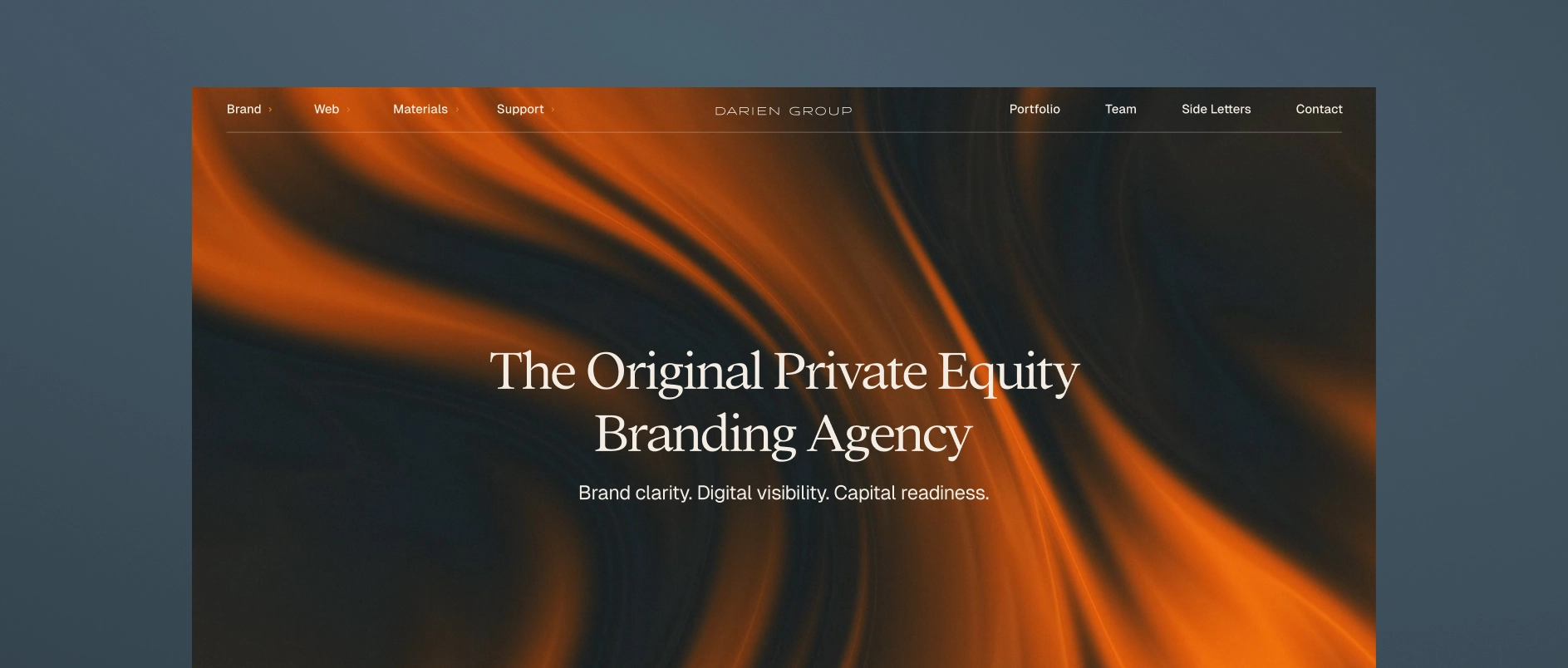
Darien Group is the only branding and communications firm built exclusively for investment managers. Our work centers on helping firms articulate a differentiated strategy, communicate clearly with LPs and founders, and present a credible, cohesive identity across every touchpoint.
What makes Darien Group different:
Private-markets fluency
We work exclusively with investment managers. That specialization translates into deep understanding of fund strategy, value creation, LP expectations, GP–founder dynamics, and the nuances of middle-market fundraising.
Narrative-first strategy
Our team helps clients articulate why their strategy works - not just what they do. Positioning, messaging frameworks, and story architecture are designed specifically for LP, founder, and intermediary audiences.
Institutional investor materials
Pitchbooks, PPMs, annual reports, quarterly updates, and fund overviews are built to an institutional standard, combining clarity, compliance alignment, and compelling structure.
Digital platforms built for today’s investors
We specialize in building websites and digital platforms that communicate a firm’s strategy with clarity and credibility. Our work includes partner bios, sector pages, insights hubs, and news systems - all designed to support deal sourcing, LP diligence, and founder engagement.
Modular content & communication systems
We develop messaging frameworks and repeatable content structures that help investment managers communicate consistently. These systems align websites, pitch materials, and ongoing updates so a firm’s story remains cohesive across every channel.
Boutique, high-touch model
Strategy, messaging, design, and execution are delivered by specialists who understand the expectations and pace of private-market teams.
Best for investment managers who need: A differentiated investment story, LP-ready materials, modern digital presence, and a partner who deeply understands private equity, private credit, and alternative investments.
2. Grady Campbell

Grady Campbell is a full-service strategic branding and marketing agency with decades of experience, offering integrated brand, marketing, design, digital, content, and public-relations services. While they serve a broad set of verticals - from commercial banking to industrial, consumer, law, and technology - they maintain a dedicated private-equity vertical and specialized offerings for lower- and middle-market PE firms.
Best for Investment managers who need: integrated marketing programs, video and animation production, and public relations strategies.
3. 51 Labs
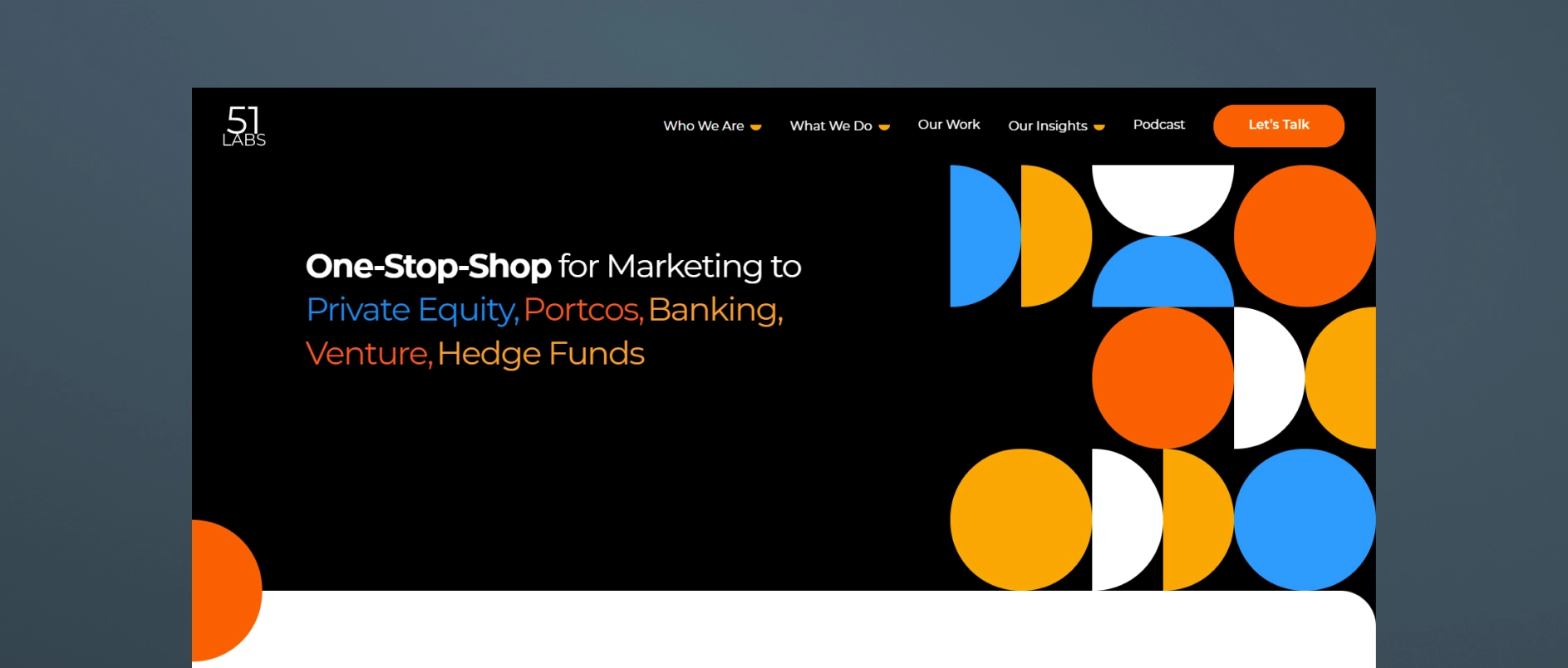
51 Labs is a modern marketing partner focused on private equity, credit, and finance firms. They combine financial-industry fluency with creative execution to deliver branding, websites, video, and content marketing. Their specialty is LinkedIn and video content, making them especially effective for firms seeking consistent visibility, platform + portfolio branding, and active engagement across digital channels.
Best for investment managers who need: a steady stream of LinkedIn content, video assets, and digital storytelling and unified branding across portfolio companies.
4. Bluetext

Bluetext is a full-service digital marketing and communications agency based in Washington, D.C., delivering branding, brand-revitalization, website design and development, content and digital marketing, thought-leadership campaigns, SEO, public relations, and demand-generation services.
Best for investment managers who need: pipeline building, deal-flow generation, and ongoing visibility.
5. Bladonmore
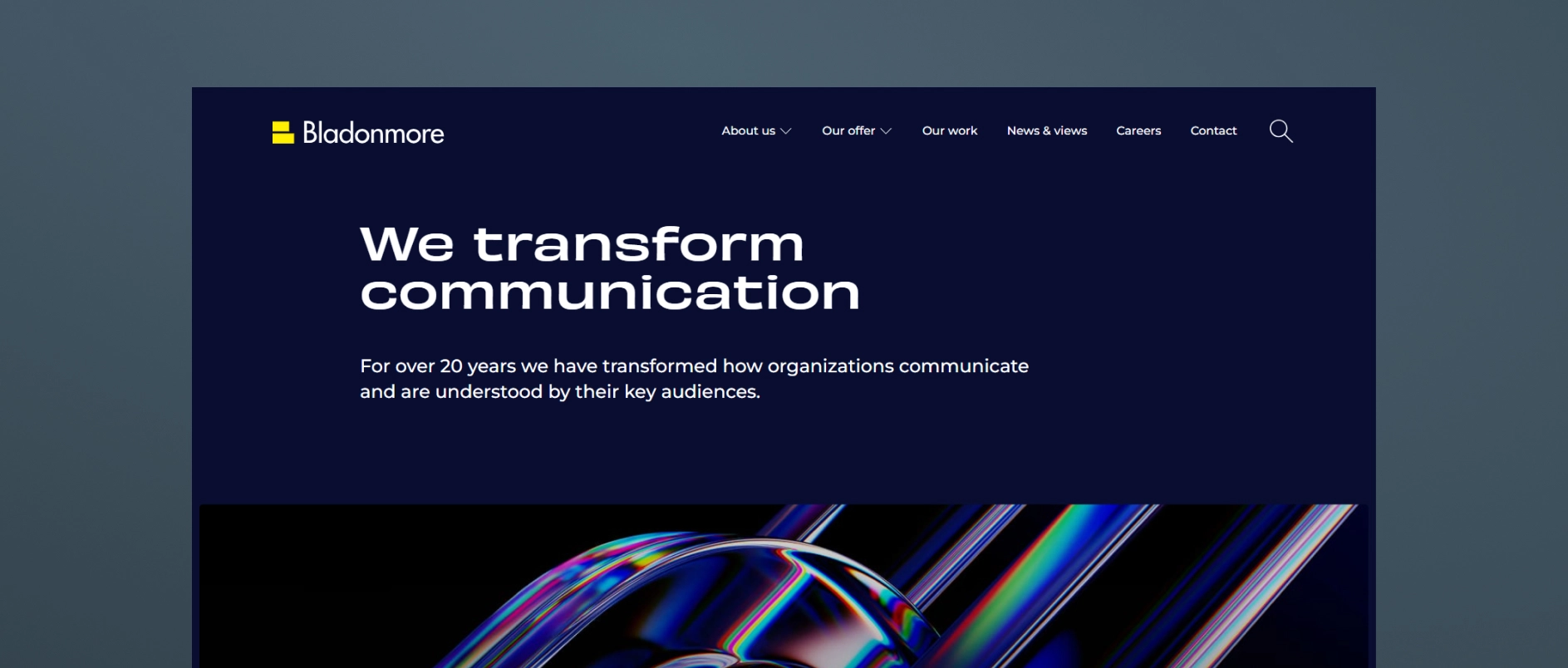
Bladonmore is a global stakeholder-communications agency with 20+ years of experience building brand, investor communications, digital content, film, and sustainability messaging for corporations, investors, family offices, and private-market clients.They combine strategy, creative design, digital execution, editorial, and multimedia to help clients articulate complex business stories.
Best for investment managers who need: institutional-grade investor communications, ESG/sustainability storytelling, global stakeholder messaging, public-market exposure, and reputation management.
6. The Durkan Group

The Durkan Group is a digital-focused design studio specializing in brand identity, UX/UI, and custom website development. They create clean, modern, user-centered digital experiences supported by thoughtful visual systems and structured messaging.
Best for investment managers who need: a prioritized user experience, intuitive navigation, and design-first identity over heavy content-generation or marketing campaigns.
7. FINE
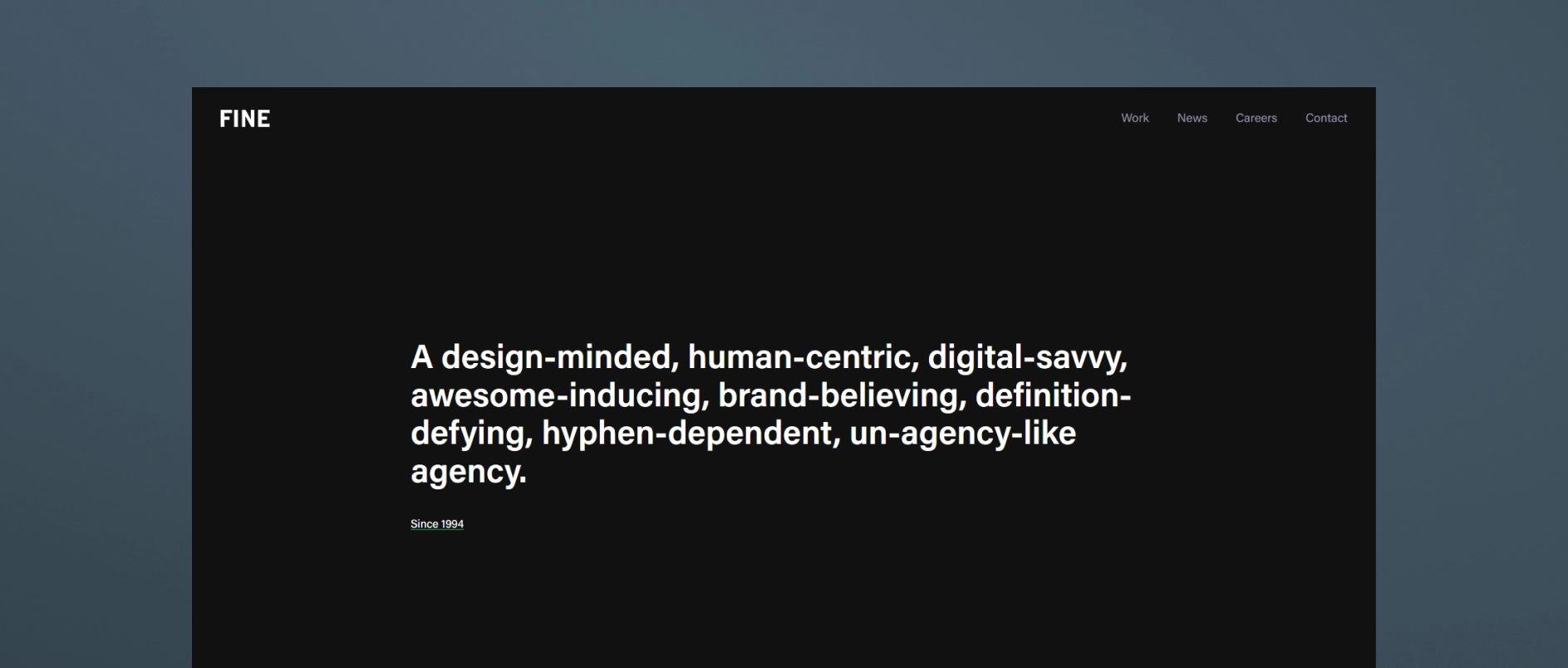
FINE is a high-end creative agency known for big-idea brand thinking, striking visual identity systems, and highly polished, immersive digital experiences. While not exclusive to investment managers, their portfolio spans hospitality, luxury, consumer, and high-growth brands - giving them a reputation for elevated, expressive, and design-rich work that stands out in any industry.
Best for investment managers who need: a bold, premium brand expression; prefer a more conceptual, high-aesthetic creative direction; or seek a visually memorable website and identity system drawn from world-class cross-industry design rather than traditional finance conventions.
8. Monogram Group
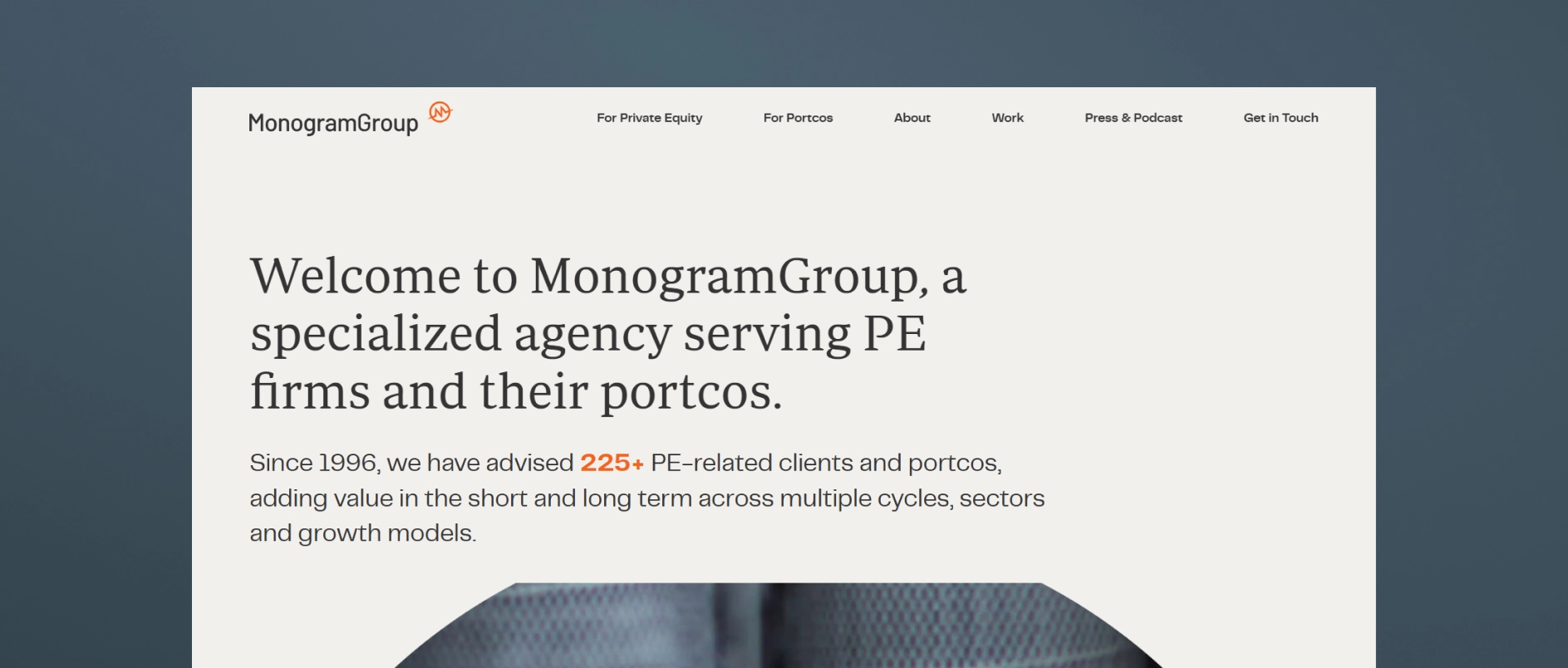
MonogramGroup is a seasoned agency (35+ years) that specializes in private equity and portfolio-company branding. They combine brand strategy, messaging, visual identity, web design, and go-to-market execution to help PE firms and their portcos sharpen positioning, support fundraising and deal sourcing, and scale brand value across the investment lifecycle.
Best for investment managers who need: an agency that can manage the full lifecycle: from pre-deal diligence and brand architecture through post-deal integration, portfolio-company identity, and exit preparation.
9. Consequently Creative

Consequently Creative is a boutique studio that focuses on crafting distinctive brand identities, visual systems, websites, and digital assets. Their work emphasizes storytelling through design, combining identity, layout, UX, photography, and motion to create brands that feel modern, cohesive, and expressive.
Best for investment managers who need: a boutique partner to develop brand and website assets with craftsmanship and attention to detail, or prefer a creative studio that can elevate the look, feel, and digital presence of both the firm and its portfolio companies without requiring full investor-materials support or institutional content strategy.
10. Clever Design

CleverDesign is a New York-based firm with decades of experience in web design, logo creation, and graphic design, and a history of working with private equity, investment banking, hedge funds, and other financial services clients. Their core offerings include websites, brand identity, logo design, pitchbooks / presentations, graphic design, and digital collateral.
Best for investment managers who need: a clean, professional, and finance-sector–tailored website or brand identity rather than full-scale content, marketing, or private-markets narrative support.



Why visual simplicity, risk framing, and trust cues shape how non-traded REITs are received
Non-traded REITs occupy a unique position in the real estate landscape: structurally institutional, but increasingly distributed through wealth channels where investor experience, communication style, and product literacy vary widely. This dual identity creates a branding challenge that many managers underestimate.
Institutional LPs typically engage materials through detailed analysis. Retail investors and their advisors may engage through a broader set of cues — clarity, structure, emotional tone, and trust signals that help them determine whether the product feels understandable and appropriate for their portfolio.
The disconnect that can arise is not about sophistication, but rather context: retail audiences interact with information differently, and their assessment process often begins with design and framing rather than deep-dive mechanics. Brands that account for this difference create a smoother path to comprehension and comfort. Brands that don’t often find their narrative obstructed before the product itself is considered.
At Darien Group, this is where we often see the greatest opportunities and the most common missteps.
1. Visual Simplicity Isn’t Cosmetic. It’s Interpreted as Clarity
Many managers entering the non-traded REIT space assume the design language of institutional materials translates naturally, but in our experience, that's not always the case. Retail-facing products benefit from a level of visual simplicity that helps audiences understand how to navigate the content before they evaluate what the content says.
The strongest examples in the category — including publicly visible leaders such as SREIT — lean heavily into:
- Clean layouts and readable type systems
- Minimalist exhibit design
- Clear sectional hierarchy
- Consistent card-based content blocks
These choices are not aesthetic flourishes; they create a cognitive environment where key ideas feel accessible. Simplicity signals intentionality, which in turn supports trust.
Managers often overestimate how much information must appear on a page for it to feel “institutional.” In non-traded REITs, disciplined reduction, not embellishment, is the more effective trust cue.
2. Risk Framing Must Be Structured, Not Softened
Non-traded REITs are disclosure-rich products by design. Retail investors and advisors expect transparency, but the sequence in which risk information appears meaningfully shapes how it is received.
Effective risk framing in this channel typically includes:
- A high-level articulation of what the REIT aims to deliver
- A balanced summary of risk considerations written in plain language
- Contextual exhibits that help translate how the strategy behaves across cycles
- A consistent format across reports, fact sheets, and microsites
What retail audiences value is not a reduction of risk language, but a responsible arrangement of it. Disclosures that appear chaotic, overwhelming, or visually disjointed can unintentionally heighten perceived risk, even when the content itself is standard.
3. Disclosure-Heavy Design Requires Intentionality
In the institutional world, extensive disclosures are expected at the end of every document. In the non-traded REIT environment, disclosures often accompany nearly every asset-level chart, performance reference, and distribution statement.
This density makes design essential.
Managers who treat disclosures as an afterthought often end up with:
- Layouts that feel crowded
- Pages where the eye doesn’t know where to land
- Important ideas overshadowed by formatting issues
By contrast, leader-class programs tend to:
- Integrate disclosures harmoniously along the bottom grid
- Use scale, spacing, and typography to maintain balance
- Keep the primary narrative readable and intact
Good disclosure design doesn’t make a REIT look promotional; it makes it look prepared.
4. Trust Cues Are Accumulative, Not Singular
Retail trust is built across moments, not from a single design element or line of copy. When we audit non-traded REIT programs, the strongest performers usually exhibit consistency across:
- The homepage, which explains the strategy succinctly
- The fact sheet, which is navigable in under a minute
- Quarterly updates, which follow a repeatable structure
- Portfolio pages, which avoid overwhelming detail and highlight what matters
- Subscription pathways, which feel intuitive and friction-light
Trust is often compromised when even one of these elements diverges stylistically or structurally from the others. A cohesive ecosystem communicates reliability.
This is where many managers misjudge perception. Retail audiences rarely articulate these inconsistencies, but they do feel them. Design alignment across touchpoints communicates professionalism just as powerfully as performance charts.
Closing Thought
Non-traded REITs operate in an environment where branding and communication need to support the underlying strategy — not distract from it or prevent an investor from engaging with it. The managers who succeed in this channel are not those who oversimplify their story or over-polish it, but rather those who design for comprehension, structure for transparency, and communicate with calm authority.
Retail investors and advisors are not evaluating the same way institutions do. They are evaluating in a way that is appropriate to their role, their workflows, and the medium through which these products are distributed.
In a crowded landscape, brands that understand this distinction and build with intention create an immediate advantage.