
.jpg)
Side Letters
Side Letters is a collection of essays, research, and analysis on how investment firms communicate with investors, management teams, and transaction partners. The focus is practical: how firms articulate value, build credibility, and navigate increasingly complex evaluation environments.

Featured Videos
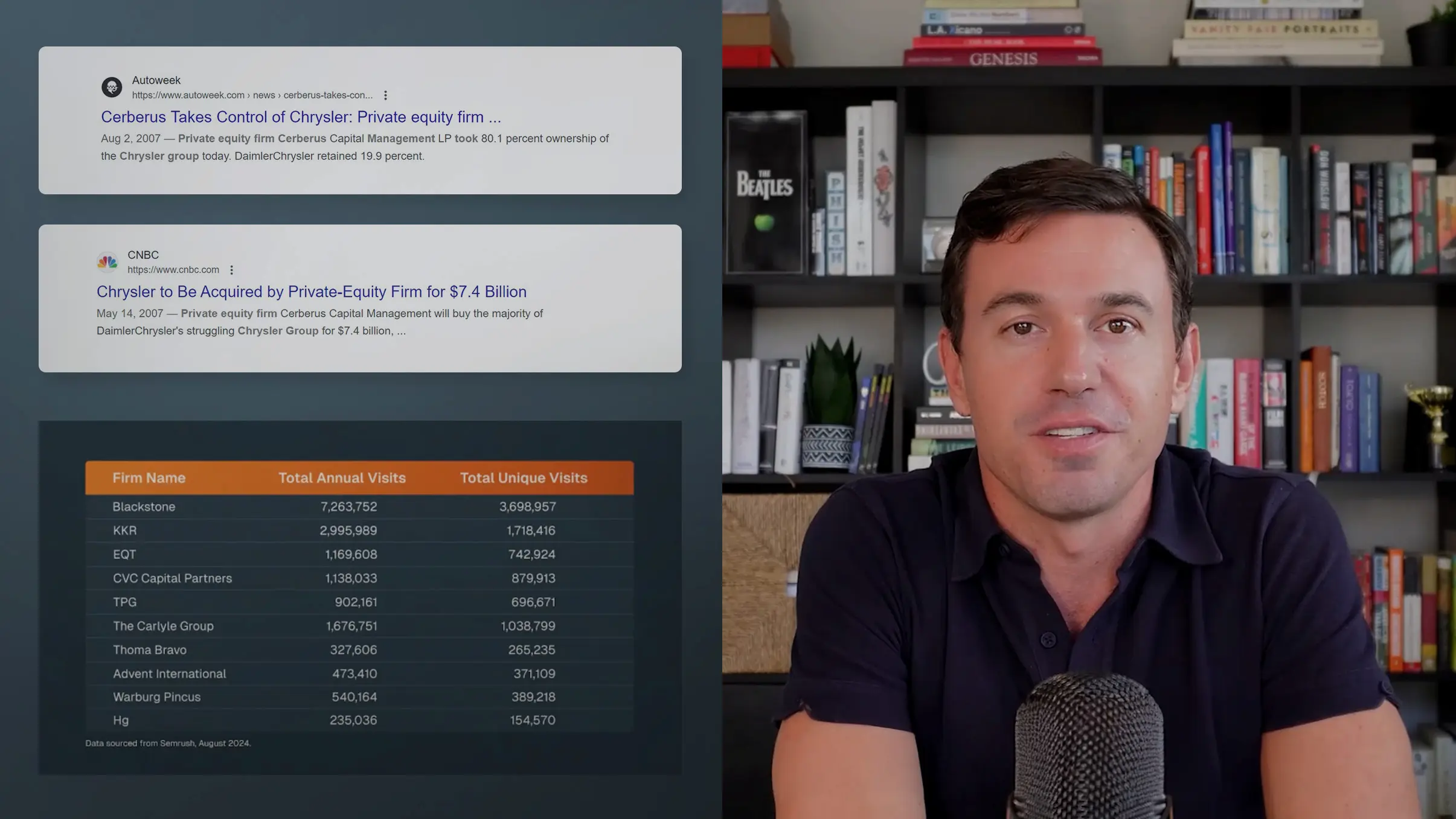

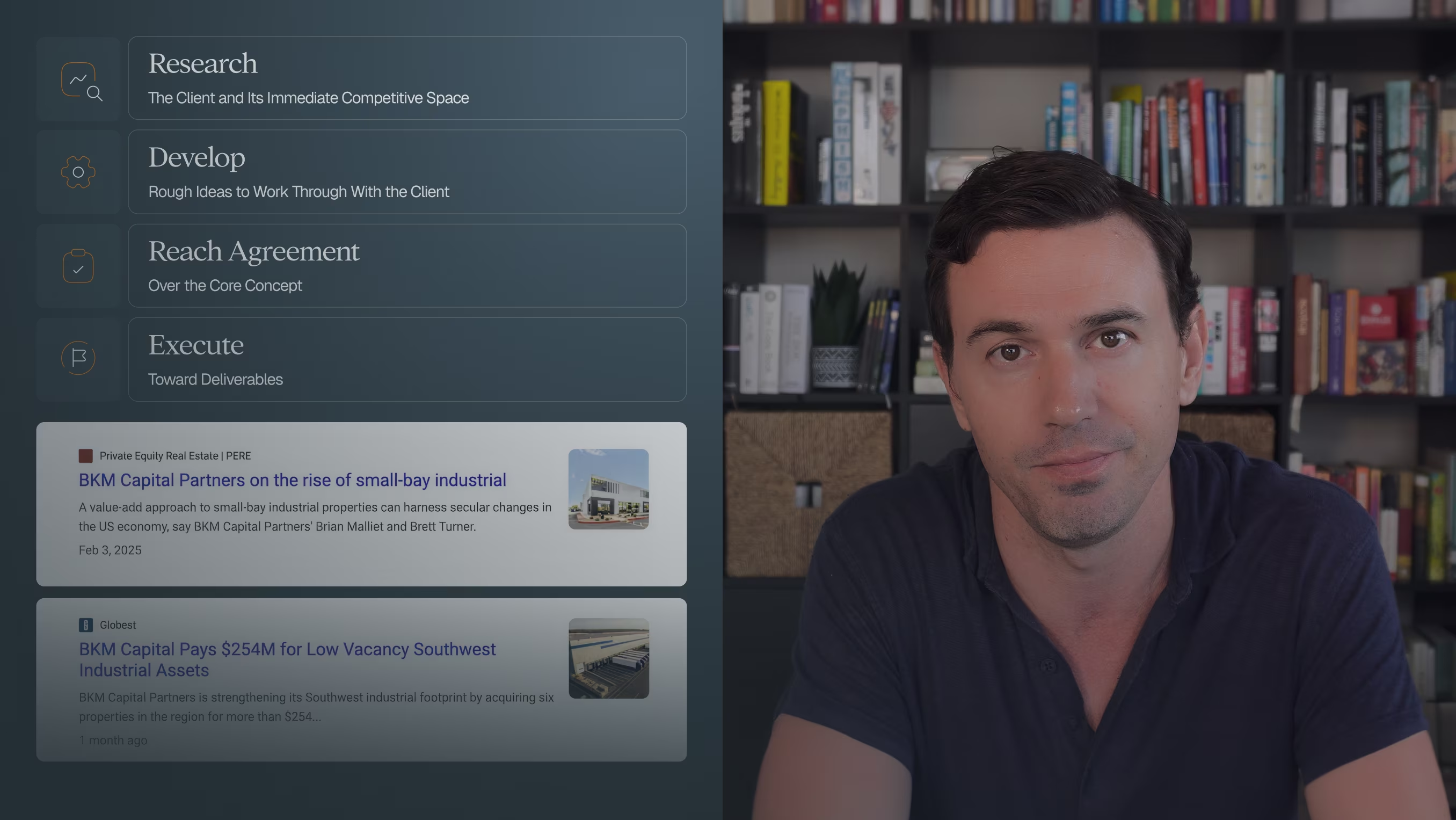




Emerging managers tend to think LPs will evaluate them along a familiar axis: strategy quality, pedigree, relevant experience, and whatever informal track record they can reasonably claim. Those elements matter, but they are rarely decisive early on. In the first handful of meetings, LPs are not ranking your strategy against other strategies. They are trying to decide whether you are investable at all. And that is a different psychological test than most emerging managers expect.
What LPs actually look for first is not upside; it’s readiness. Before they can form a view on whether your strategy is compelling, they need to believe that you are far enough along in your institutional story to justify taking the next step. A Fund I or Fund II allocation is not just an underwriting decision — it is an early judgment about organizational maturity, narrative discipline, and whether the GP understands the rules of institutional capital formation. Those judgments form in minutes, not months, and they often crystallize well before your strategy discussion is even over.
Across a decade of working with emerging managers, I’ve learned that LP expectations fall into three categories: coherence, credibility, and compression. If a manager clears those bars early, the rest of the conversation becomes meaningfully easier. If they don’t, even a sophisticated strategy will struggle to land because the LP has not yet resolved the more fundamental question of whether the GP is institutionally “real.”
1. Coherence: LPs Need a Story They Can Repeat Accurately
LPs do not retain detail the way managers think they do. They are exposed to too many first-time funds, too many repeat funds, too many strategies that rhyme with one another. In that environment, coherence is not just a virtue — it is a survival mechanism. LPs need to be able to summarize you later, often to someone who wasn’t in the meeting. And if your story doesn’t translate cleanly outside the room, it tends not to matter how strong your ideas are inside it.
Coherence, in practice, means you can explain who you are and what you do in a language LPs already understand. A clear category. A defined strategy. A narrow, believable edge. Too many emerging managers default to subtlety, hoping nuance will communicate sophistication. In reality, it creates fog. If an LP cannot describe your strategy in two or three sentences, the probability that they will return for a second meeting drops sharply — not because they don’t like you, but because they can’t remember you.
LPs don’t need perfection. They need portability. That is the quiet test emerging managers don’t realize they’re being graded on.
2. Credibility: LPs Need to Believe You Are “Institutionally Ready”
Credibility is not the same as experience. LPs routinely meet managers who have impressive backgrounds, sharp intellects, and rich histories of exposure to complex transactions. But credibility requires a different kind of signal: the sense that the manager can run a disciplined investment process, communicate clearly, withstand scrutiny, respond to surprises, and behave like a fiduciary.
This is why brand and narrative matter so much more than emerging managers expect. LPs cannot see your underwriting process. They cannot see your deal judgment in real time. They cannot see how you behave under pressure. What they can see is whether your materials are organized, whether your website reflects thoughtfulness instead of chaos, whether your messaging is stable, and whether the way you talk about your own strategy aligns with how a professional investor would evaluate it.
No LP will ever say, “Your deck looks sloppy, so we assume your underwriting is sloppy,” but that inference happens constantly. LPs look for disqualifiers early: unfocused strategy language, mismatched design choices, a narrative built entirely around pedigree, or a website that feels like a developer’s landing page instead of an investment firm. These friction points are not fatal individually, but collectively they form an impression that the manager is not quite ready for institutional capital.
Credibility is quiet. It’s not something you can boast about; it’s something you signal through the quality of decisions you’ve already made.
3. Compression: LPs Need You to Get to the Point Faster Than You Think
If there is a single universal friction point for emerging managers, it is their tendency to overexplain. When you’re early in your story, everything feels important. Every deal, every operating insight, every nuance of your sourcing advantage feels like it must be included. But LPs do not grant unlimited attention. They decide quickly whether the essence of your strategy is understandable, durable, and aligned with their mandate.
Compression is a discipline. It forces emerging managers to decide what matters most and discard what only matters to them. When I was raising for BKM Capital Partners in 2014, it took too many slides to explain the multitenant industrial thesis. We eventually sharpened it, but the early version buried the most important point under a mountain of detail. Only later did I realize how common this problem is. Emerging managers regularly bury their own lead, often because they’ve never been forced to articulate the one or two ideas that truly define their strategy.
LPs form early impressions on the basis of clarity, not volume. When a manager can express their strategy in a way that feels simple without being simplistic, LPs lean in. When a manager requires fifteen minutes of backstory to land their point, LPs start filtering out.
Closing Thought
Before LPs learn to like you, they need to understand you. Before they can understand you, they need to believe you are prepared. And before they believe you are prepared, they need to see a story that makes sense on its own terms — one that is coherent, credible, and compressed enough to survive outside the room.
Emerging managers often think fundraising is a referendum on their strategy. In practice, it is a referendum on their clarity. Strategy becomes persuasive only after the LP decides the manager is institutionally real, and clarity is the shortest path to that judgment.


1. The Legitimacy Gap: The Real Problem Emerging Managers Face
After working with hundreds of emerging managers across private equity, real estate, credit, and niche alternatives, you start to notice the real patterns — not the optimistic conference panels, but the structural truths shaping Fund I, Fund II, and Fund III trajectories. “Emerging manager” is a broad term, but what unifies this group isn’t AUM or asset class. It’s that they are early in their institutional story, and LPs can usually tell immediately.
The obstacle is the legitimacy gap — the distance between how a manager sees themselves and how an LP perceives their readiness. Strategy, pedigree, and track record matter, but legitimacy is the threshold condition that determines whether anyone will take the next step. In plain terms: Darien Group helps emerging managers close the legitimacy gap faster than they could on their own.
2. The Nonlinear Reality of Early Fundraising
Most emerging managers understand conceptually that fundraising will be hard, but many still assume it will follow some recognizable pipeline. In reality, Fund I and Fund II almost never move in straight lines.
When I worked at BKM Capital Partners during their first fundraise, the expectation was that friends and family would anchor $25–50 million. They didn’t. The turning point came from a single Scandinavian LP who happened to be in Los Angeles for one day. We were taking twenty meetings a week; that one meeting changed the trajectory.
You do not know which meeting matters — and you cannot engineer the sequence.
What you control is your consistency. Everything else is unpredictable.
3. LPs Often Don’t Understand Your Category — And You Must Bridge That Gap
Another structural reality is that LPs often don’t understand a category nearly as well as the GP assumes. At BKM in 2014, multi-tenant industrial was seen as non-institutional: too small, too operational. Five years later, it was a multi-billion-dollar institutional staple.
Much of that gap was closed through education. Brian Malliet produced extensive collateral not because he liked marketing, but because emerging managers often have to demonstrate that the category itself deserves institutional attention. Today’s emerging managers know they need a website and a pitchbook, but they still underestimate how much education is required — and how high the bar has become.
4. Why Some Emerging Managers Break Through — and Most Don’t
The managers who eventually succeed distinguish themselves in ways that have little to do with polish or charisma. They stay consistent when the market is slow to respond. They specialize instead of drifting toward generalist territory. And they choose strategies the market actually wants.
You cannot brand or design your way out of a weak thesis. You cannot out-pedigree an established incumbent. But if you are the sharpest expression of a category the market is curious about — and you communicate that clearly — you will eventually find the LPs who recognize it.
Consistency and specialization beat cleverness and pedigree.
This is a quiet truth people don’t say out loud, but it is one of the defining characteristics of the managers who make it.
5. The 10-Year Journey: How LPs Actually Form Memory
The “10-year journey” is not a motivational slogan. It is the psychological structure of emerging manager fundraising. Nearly every Fund I manager hears: “We like it — come back for Fund II.” It isn’t always dismissal. LPs can only allocate to a small set of new managers each cycle; the rest are catalogued for later.
Here is the rough math:
- Most early meetings won’t produce capital.
- A minority will matter years later.
- The decisive ones often surface unexpectedly.
LPs remember only two or three things about you. Those things must be durable enough to make sense when they see you again in three years.
6. LPs Look for Disqualifiers First—Often Before They Look for Strengths
Emerging managers tend to assume LPs are evaluating them with optimism. In reality, LPs begin in filtering mode. Whether the LP is a CIO at a major institution or a sophisticated family office, they make early judgments based on coherence, clarity, and organization.
Common disqualifiers include:
- sloppy, outdated, or overdesigned materials
- messaging built entirely on pedigree
- jargon without a point of view
- broker-like or developer-like websites
- lack of clear specialization
- strategy drift or narrative drift
LPs evaluate operational discipline through brand and materials. If your deck is disorganized, they assume your underwriting is disorganized. These judgments form much earlier than most emerging managers imagine.
7. What Institutional Legitimacy Actually Looks Like at the Beginning
Legitimacy at Fund I or Fund II isn’t about appearing large; it’s about appearing ready. A coherent brand, a credible website, a pitchbook that withstands scrutiny, sober expectations, and a strategy distilled into a few memorable ideas go much further than managers expect.
If you are young in “fund years,” your brand has to do a little extra work to signal maturity. This isn’t pretense — it’s optics, and LPs react to it immediately.
8. The True Purpose of a Fund I Pitchbook
Most emerging managers misunderstand this. A Fund I pitchbook is not theatrical persuasion. It has two practical responsibilities:
- Establish the category — especially if it is new, evolving, or misunderstood.
- Establish your ownership of it — why your angle is sharper or more structurally advantaged.
Even in HNW settings, the deck is usually forwarded internally. It must be designed to withstand that level of scrutiny.
9. The Mindset Shift from Syndications to Funds
Transitioning from deal-by-deal work to fund management requires a different time horizon. Syndications reward episodic success; funds reward sustained progress. Many syndicators attempting Fund I never close it — not because they lack talent, but because the strategy doesn’t scale or they lose momentum before the flywheel turns.
In many cases, Year 1 is quiet; Year 2 is where traction appears. Fund I is not the destination. It is Chapter One in a multi-fund arc.
10. What Darien Group Actually Does for Emerging Managers
We are not here to make an emerging manager look like a billion-dollar platform. Nor are we here to gloss over weak strategies. Our role is to help managers articulate a coherent, durable narrative; sharpen their point of view; build materials that won’t age poorly; and find the intersection between professionalism and personality.
Or, said more bluntly:
We help emerging managers close the legitimacy gap faster, so they can spend more of their energy actually building the track record that will carry them forward.
11. The Fundamentals Haven’t Changed — But the Bar Has
Capital raising has changed more in the last four years than in the previous decade. Expectations are higher. LPs filter faster. But the fundamentals remain constant: a coherent category, a compelling strategy, a durable story, and consistency over time. Emerging managers can’t control how long momentum takes to form, but they can control the clarity and maturity of the story they tell.
Everything else sits downstream of legitimacy.



Annual General Meetings ("AGMs") in real estate are usually viewed as a reporting milestone: update the numbers, refresh the case studies, adjust the market slides, and distribute the deck. But increasingly, the AGM is becoming something more consequential — a moment when managers step back and reconsider how they are telling the story of their platform.
It’s one of the few points in the year when investment, operations, and IR align around the same question:
Does our narrative accurately reflect who we are today and the strategy we need to express in this cycle?
When approached thoughtfully, the AGM doesn’t just summarize performance. It becomes a strategic reset — an opportunity to refine positioning, sharpen the thesis, and ensure the story LPs encounter is the story the firm intends to tell. And because AGM decks often circulate long after the meeting itself, they carry disproportionate influence in shaping how stakeholders interpret the platform for the year to come.
AGMs Surface Narrative Gaps That Day-to-Day Materials Don’t
Across the industry, we see a recurring pattern: firms with strong platforms and disciplined execution often present narratives that undersell their sophistication. The AGM process tends to expose those disconnects, in large part because managers are forced to revisit assumptions they may not have revisited in months or even years. Here are three of the common missteps Darien Group looks out for in AGM materials:
1. The investment thesis is implied, not articulated.
Managers know why they pursue a strategy, but the rationale often lives in the heads of senior leadership, not in the materials themselves. The AGM forces clarity: What is your interpretation of the market today? What are you solving for? Why now?
This clarity becomes especially important in cycles where macro narratives overwhelm sector nuance. If managers don’t explicitly articulate the logic behind their strategy, others will fill in the gaps.
2. Execution advantages are real but invisible.
Decision-making speed, cycle-tested judgment, operating discipline — these strengths don’t always make their way into the narrative. AGM preparation reveals where the story lacks depth or specificity.
Many platforms assume these capabilities “speak for themselves.” In practice, they rarely do. The AGM invites teams to translate their operating DNA into language that external audiences can recognize and understand.
3. The deck reflects last year’s market, not this year’s cycle.
Real estate is uniquely cyclical. A slide that worked in one market environment may dilute the story in another. The AGM is a natural checkpoint for recalibrating what the materials need to communicate now.
Often, what needs to change isn’t the strategy itself — it’s the frame. When the market context changes, the narrative must evolve to reflect the new conditions in which the strategy is being executed.
“The AGM is one of the rare moments when LPs expect — and welcome — a refreshed point of view. If the story is evolving, this is the place to show it.”—Jessica Haidet, Director of Brand Strategy at Darien Group
Four Reframing Moves That Strengthen an AGM Narrative
In our work helping real estate platforms clarify and sharpen their messaging, four narrative shifts consistently strengthen the AGM story. These shifts don’t require changing the strategy, rather expressing it with greater clarity, coherence, and strategic intent.
1. Lead with the thesis, not the assets.
Many managers instinctively begin with recent acquisitions or property-level results. But a stronger AGM narrative opens with market interpretation — clear, concise, and specific to the environments the firm operates in.
A thesis-led opening establishes context before the details appear. It helps audiences understand not just what you’re investing in, but why the moment matters. Without this context, even strong performance can appear disconnected from broader market forces.
2. Elevate the mechanics that make the strategy work.
AGM decks often include the what — recent acquisitions, occupancy figures, capital plans — but underemphasize the how. The details that distinguish one platform from another:
- What enables sourcing advantage
- How underwriting differs from peers
- Where operational sophistication shows up
- How the team adjusts as the cycle shifts
These elements often represent the firm’s true edge, yet they remain underexpressed unless intentionally surfaced. AGM season allows managers to translate operational nuance into strategic clarity.
3. Show the maturity of the platform — visually and structurally.
AGM materials function as an interpretive frame. When the deck is modern, clear, and structured intentionally, it conveys organizational coherence and operational discipline. When materials appear dated or overly developer-like, they can unintentionally suggest a less institutional posture.
Even simple adjustments — cleaner slide hierarchy, crisper language, more intentional ordering — can meaningfully change the impression a platform creates.
4. Make the “so what” unmistakable.
AGMs give managers the opportunity to connect the dots between what the platform does and what that means for investors. The implications are often the missing layer:
- How the firm’s capabilities contribute to consistency
- How execution discipline supports long-term outcomes
- How the strategy aligns with current market dynamics
- What advantages capital partners gain by investing with this team
Rather than assuming the meaning is self-evident, AGM presentations allow managers to articulate it directly. When managers explain not just the mechanics of the strategy but the significance of those mechanics, the deck becomes a far more powerful communication tool.
Why This Matters Especially Now
Capital is selective, cycles are complex, and attention is finite. Firms that communicate clearly — not just operate well — position themselves more effectively. The AGM is often the only moment where the entire strategic narrative is reconsidered rather than merely updated.
A strategically reframed AGM narrative helps managers:
- Reassert where their strategy fits in the current environment
- Demonstrate conviction through clarity, not volume
- Reduce interpretive effort for LPs
- Translate operating strengths into understandable signals
- Strengthen the through-line between past performance and future opportunity
- Inform investors of upcoming funds and strategic shifts
This is especially important in moments when performance alone cannot carry the story. A clear narrative can contextualize challenges, highlight durability, and position the platform as thoughtful and cycle-aware even in periods of uncertainty.
In cycles where differentiation is harder to articulate, a well-structured AGM becomes one of the most effective storytelling tools a real estate manager has, both internally and externally.
The Takeaway: The AGM Isn’t Just Reporting — It’s Repositioning
Real estate managers who treat the AGM as a strategic moment — not a procedural one — tend to emerge with clearer messaging, stronger alignment, and a more coherent expression of their platform.
The goal is not reinvention. It’s coherence.
A strong AGM communicates:
- A thesis that reflects the cycle
- A strategy that aligns with that thesis
- A team whose discipline and maturity are evident
- A platform whose story is as strong as its execution
When these elements lock into place, the AGM becomes more than a backward-looking update — it becomes the annual opportunity to sharpen the identity of the platform itself. And because AGM materials often influence conversations long after the meeting, the impact of this work extends far beyond the hour it is presented.


What Is AI-Optimized Content for Private Equity Firms?
AI-optimized content for private equity firms is material designed to be understood, indexed, and surfaced by large language models (LLMs) such as ChatGPT, Claude, and Gemini. Unlike traditional SEO copy that chases keywords and rankings, AI-optimized content anticipates natural-language questions, provides clear and verifiable answers, and conveys a firm’s strategy, track record, and differentiators in a format AI systems can easily interpret. For private equity executives, this shift transforms content from a marginal marketing exercise into a strategic visibility asset.
Why Does AI-Optimized Content Matter Now?
For decades, SEO was largely irrelevant in private equity because sellers did not search for firms on Google and LP relationships formed offline. LLM adoption has changed that dynamic. Stakeholders—ranging from founders and registered investment advisors to family offices and intermediaries—are now asking AI tools direct questions about market players, sector focus, and founder-friendliness. If a firm has not published relevant, substantive content, it risks invisibility in AI-generated responses that increasingly influence decision-making.
How Do LLMs Change Content Discovery?
LLMs differ from search engines by delivering direct answers rather than lists of links. A founder might ask, “Which private equity firms specialize in RIA roll-ups?” or “Who has done deals in niche manufacturing?” If a firm’s website contains narrative, example-rich explanations that LLMs can parse, that content is more likely to be cited in the answer. This advantage extends beyond deal origination—AI-enabled discovery will also influence LP validation, banker recommendations, and competitive positioning.
What Content Formats Are Most Effective for LLM Visibility?
Content that is educational, narrative-driven, and free from excessive marketing language performs best for LLM comprehension. Case studies, founder stories, sector overviews, and transparent explanations of investment philosophy are high-value formats. These pieces should demonstrate how the firm operates, the types of companies it partners with, and the results achieved. Unlike time-sensitive market commentary, evergreen narratives maintain relevance, ensuring that LLMs continue to surface them long after publication.
How Should Private Equity Firms Balance Specificity and Discretion?
The most credible AI-optimized content avoids vague generalities and focuses on tangible details. Instead of simply claiming to be “founder-friendly,” firms should illustrate that claim with actual portfolio experiences, leadership testimonials, or concrete deal structures—while omitting sensitive financial or competitive intelligence. Specificity builds trust with both human and AI evaluators, helping to differentiate the firm from competitors who rely on broad, interchangeable statements.
Why Is AI Content Readiness a Strategic Investment?
Even if immediate AI mentions seem optional, developing AI-optimized content builds long-term marketing resilience. Firms that invest now create a foundational narrative they can scale quickly when market conditions shift, whether due to changes in LP composition, competitive deal processes, or public exposure. As with the pivot to digital presence during the COVID-19 pandemic, those with a pre-existing content infrastructure will adapt faster and with greater credibility than those starting from zero.
How Can Firms Begin Creating AI-Optimized Content?
Private equity firms do not need to become media companies to succeed. The starting point is publishing one or two well-crafted pieces per year that clearly state what the firm does, who it serves, and how it operates. Authenticity matters more than volume or polish. By building this baseline and maintaining consistency, firms ensure that LLMs can associate their name with specific capabilities, sectors, and cultural attributes—strengthening visibility and influence in the evolving digital diligence process.


What Is a Private Equity Website?
A private equity website is a digital platform that communicates a firm’s identity, investment approach, and track record to multiple stakeholder audiences—including limited partners (LPs), sellers, management teams, and intermediaries. In today’s market, the website functions as an early-stage diligence tool, shaping perceptions before any formal conversations occur. It is no longer a static “about us” page; it is a brand-defining, credibility-testing, and deal-filtering mechanism that operates continuously.
How Do Websites Influence Early-Stage Diligence?
Stakeholders now form initial judgments within the first 90 seconds of visiting a private equity website. LPs validate the messaging they have heard from placement agents, assessing whether the site reflects institutional discipline. Sellers evaluate whether the firm understands their business and has executed relevant deals. Bankers quickly determine whether the firm is a qualified buyer for a transaction. These quiet but decisive impressions directly affect whether opportunities progress or stall before a pitch deck is even requested.
Why Must Websites Address Multiple Audiences?
A modern private equity website must balance the expectations of distinct audiences without diluting the firm’s message. Historically, sites catered primarily to LPs, but market dynamics now place equal weight on seller and intermediary perceptions. LPs seek clarity and professionalism; founders look for transparency and cultural compatibility; bankers want quick, decisive signals about deal fit. Effective sites address these needs simultaneously, ensuring each visitor finds relevant proof points while the overall brand voice remains consistent.
What Design and Content Choices Impact Credibility?
Both visual and conceptual factors influence how stakeholders interpret a private equity website. Outdated layouts, generic stock imagery, or vague copy undermine credibility. Conversely, intentional design, sector-relevant deal examples, and clear articulation of value proposition strengthen trust. Omission can be as damaging as poor execution—absence of deal descriptions, culture narratives, or leadership visibility leaves visitors with unanswered questions about the firm’s capability and character.
How Does a Website Serve as a Brand Platform?
When aligned with a coherent brand strategy, the private equity website becomes the central reference point for tone, design, and messaging across all firm communications. A well-crafted site anchors visual identity, establishes a consistent narrative structure, and reinforces positioning in every investor presentation and marketing touchpoint. Even seemingly minor elements, such as the homepage tagline, carry weight—making thousands of impressions over time and serving as a shorthand for the firm’s strategic focus.
Why Is Clarity More Valuable Than Conformity?
Generic slogans like “Building great businesses” fail to differentiate in a competitive market. The most effective private equity websites prioritize specificity and audience relevance over formulaic language. In 2025, a functional online presence is not enough; the site must clearly communicate who the firm is for, the sectors it serves, and the outcomes it delivers. This clarity accelerates trust-building, improves stakeholder alignment, and positions the firm as a preferred partner in both capital-raising and deal execution.


What Is Audience-Focused Messaging in Private Equity?
Audience-focused messaging in private equity is the strategic practice of tailoring a firm’s communications to distinct stakeholder groups, recognizing that each has unique priorities, motivations, and decision-making criteria. Rather than broadcasting a generic message to “everyone,” this approach defines who the firm is for, clarifies the value it delivers, and ensures that investors, sellers, management teams, and intermediaries each see their own needs addressed. Precision in messaging not only improves understanding but also strengthens credibility in competitive markets.
Why Is Stakeholder Segmentation Essential for Messaging?
Private equity firms interact with multiple, diverse audiences. On the investor side, limited partners (LPs) range from pension funds and endowments to family offices and high-net-worth individuals, each with varying focus areas such as ESG, liquidity, or return profiles. On the transaction side, sellers, management teams, and investment banks assess potential partners through their own lenses—whether it’s deal structure, cultural fit, or execution track record. Messaging that recognizes these distinctions signals sophistication and increases engagement from all sides of the deal ecosystem.
How Should Messaging Address Transaction Audiences?
Transaction audiences—sellers, management teams, and bankers—require clarity on deal criteria, value-creation approach, and partnership philosophy. A founder selling a business after decades of ownership evaluates potential partners differently than a corporate executive executing a divestiture. Bankers filter opportunities based on how clearly a firm articulates its deal sweet spot; if they cannot summarize it in seconds, they are less likely to make introductions. Messaging for this audience should make it easy for counterparties to identify the firm as a natural fit for their transaction.
What Role Does Specificity Play in Effective Messaging?
Specificity transforms brand positioning from generic to memorable. Constellation Wealth Capital, for example, differentiated itself by focusing exclusively on acquiring businesses in the registered investment advisor (RIA) and wealth management space. This clarity made the firm’s strategy immediately understandable to LPs and attractive to prospective portfolio companies. In contrast, broad and unfocused positioning risks diluting recognition, making it harder for stakeholders to connect the firm’s name with a clear area of expertise or value proposition.
How Does Marketing Differ From Fund Documentation?
Fund documentation defines what a private equity firm can do, whereas marketing defines what the firm wants to be known for. While fund terms may allow investment outside the stated brand focus, marketing should still present a consistent, intentional identity. This separation gives firms flexibility in deal execution while maintaining a clear market presence. Effective marketing emphasizes target audiences, preferred deal types, and the value the firm consistently delivers, without undermining the strategic breadth defined in fund documents.
Why Does Clarity Outperform Generic Sophistication?
In private equity, the most effective messaging systems prioritize clarity over cleverness. The goal is to make it immediately apparent what types of LPs, sellers, and companies the firm serves, and the outcomes it creates. Clarity accelerates trust-building, enables better deal flow from intermediaries, and fosters stronger alignment with investors. By leading with direct, audience-specific value statements, firms create a differentiated position in the minds of stakeholders who have many competing options.
Which Metrics Prove a Pitchbook is Working?
An effective private equity pitchbook demonstrates its value in the fundraising process. Early-stage metrics include faster-moving first meetings, deeper follow-up conversations, and reduced need to re-explain the strategy. Later indicators include higher LP conversion rates and shorter diligence cycles. When the narrative lands, the firm’s positioning is consistently understood and repeated by LPs—often verbatim—which signals message stickiness.
